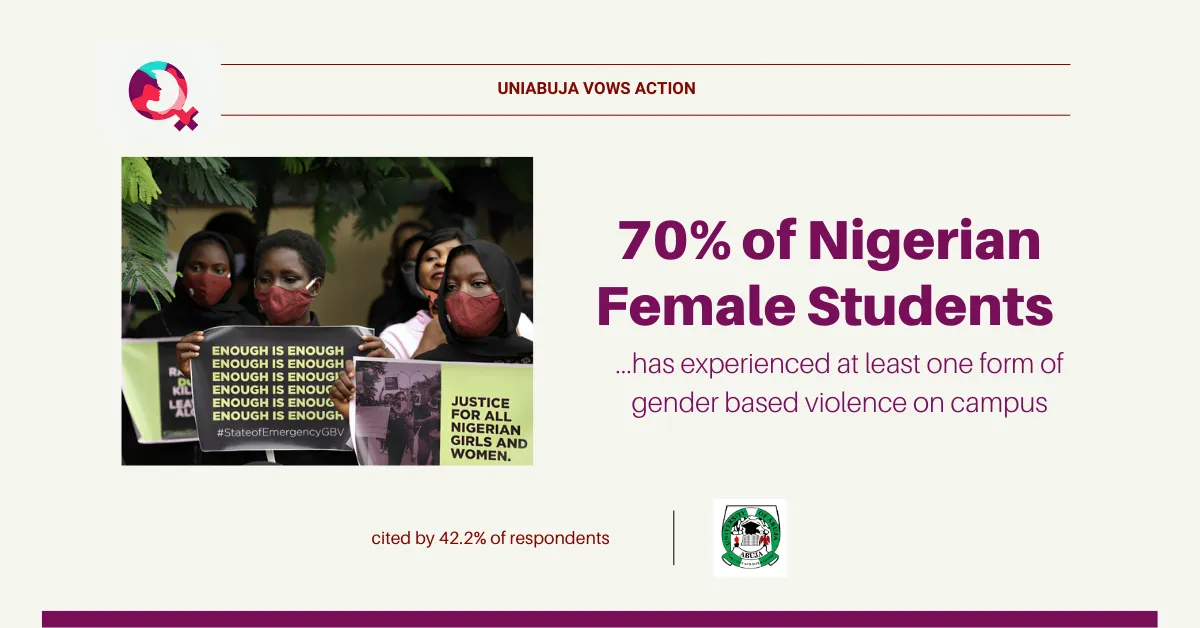
A National Survey covering twelve Nigerian Public Universities has found that Sexual Harassment on Campuses is far more widespread than official records suggest, with the University of Abuja responding by committing to a structured policy framework to address the problem.
The findings were presented at a press briefing organised by the Centre for Gender Studies at the University of Abuja to mark International Women's Day 2026, where the launch of a baseline survey on Sexual Harassment in Nigerian Public Universities also took place. The Survey was coordinated by Alliances for Africa, a research and advocacy organisation, and covered six federal and six State Universities drawn from all six geopolitical zones of the country.
The figures were stark. Approximately 70% of female students and 30% of male students reported experiencing at least one form of gender based violence on campus. Among staff, 63% of women and 37% of men reported similar experiences. Sexual misconduct, including unwanted touching, inappropriate comments, verbal abuse, and stalking, was the most frequently reported category, cited by 42.2% of respondents.
Executive Director of Alliances for Africa, Dr Iheoma Obibi, represented at the event by the Director of the Centre for Gender Studies, Dr Theresa Abok, said the findings pointed to a systemic failure in how institutions handle such cases. Many survivors, the report noted, do not report incidents due to fear of retaliation, absence of confidential reporting channels, and low trust in existing institutional systems.
For the University of Abuja, the newly appointed Deputy Vice Chancellor for Academic Affairs, Prof. Rosemary Udeozor, used the occasion to announce concrete steps the institution was already taking. She said the university senate had mandated a committee to develop comprehensive guidelines establishing a structured process for reporting, investigating and sanctioning sexual harassment cases.
"As we speak, there is a committee working on the policy framework, and the Senate has directed that the draft be presented at its next meeting. Once adopted, a committee will be commissioned to investigate cases and recommend appropriate sanctions," she said.
She added that the proposed structure would allow complaints to be filed at departmental and faculty levels before escalating to a central committee, making the process more accessible. "Just as institutions treat examination malpractice seriously, sexual harassment must also be addressed through clear policies, proper investigation and appropriate sanctions," she said.
Dr Abok confirmed that the Centre was also working to establish a confidential reporting corner and toll free lines for Students and Staff. Sociology Lecturer and Gender Programme Coordinator Dr Adeyonju Temitope Peter called on male academics and students to actively support efforts to create safer spaces on campus.
A 400 level Microbiology student, Yahaya Khairat, spoke from the perspective of those most affected, appealing for anonymous reporting channels. She said many students endure harassment in silence because they fear consequences and believe that lecturers tend to protect one another.
Dr Hadeezat Fawehinmi, Patroness of the University of Abuja Women Association, drew on the IWD 2026 theme of Give to Gain, noting that "when women thrive, we all rise."
The baseline survey forms part of a five year programme by Alliances for Africa, in partnership with Co Impact and 12 University Gender Centres, aimed at strengthening accountability systems across Nigerian public tertiary institutions.



Leave a Reply