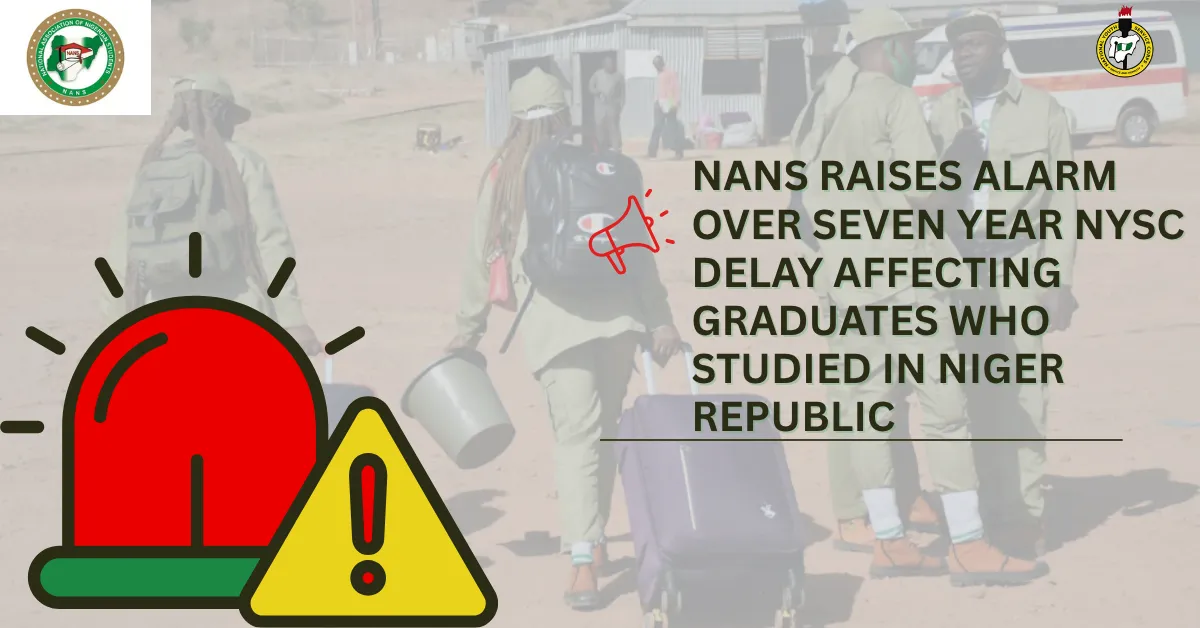
More than 25,000 Nigerian graduates who studied in the Republic of Niger have been waiting for up to seven years to be mobilised for the National Youth Service Corps scheme, and the student association representing them says the silence from Nigerian authorities has become impossible to defend.
The National Association of Nigerian Students in the Republic of Niger raised the alarm in a statement signed by its president, Abubakar Uwais, on Wednesday, describing the situation as systemic injustice against graduates who completed every requirement but have been left in administrative limbo with no clear path forward.
"These are not illegal students. These are not unqualified graduates. They are Nigerians who studied in recognised and accredited Universities in the Republic of Niger, complied with every requirement, obtained clearance from the Federal Ministry of Education, and registered with the National Youth Service Corps in good faith," Uwais said.
The consequences for the affected graduates are not merely administrative. Under Nigerian law, NYSC participation is a prerequisite for employment in most public and private sector roles, meaning that seven years without mobilisation effectively means seven years locked out of the formal economy. "Their dreams are delayed. Their futures are on hold. Their lives are paused not because they failed, but because the system has failed them," Uwais said.
The Association also alleged that the mobilisation process had been actively undermined by individuals submitting false petitions and misleading communications to Nigerian authorities under the cover of unregistered associations claiming to operate from the Republic of Niger. Uwais said the Government of Niger had officially disowned such correspondence, stating that all legitimate official communication is transmitted strictly through diplomatic channels.
The NANS president called on the Nigerian government to investigate the matter urgently, verify submitted credentials, and facilitate the immediate mobilisation of all affected graduates. He warned that continued inaction risked straining diplomatic relations between Nigeria and the Republic of Niger. "This is no longer just an administrative delay; this is Institutional injustice," he said.
For the graduates caught in this impasse, many of whom finished their degrees years ago and have watched their peers move on while they remain stuck, the Association's intervention is a public escalation of a private frustration that has gone unaddressed for far too long.


Leave a Reply