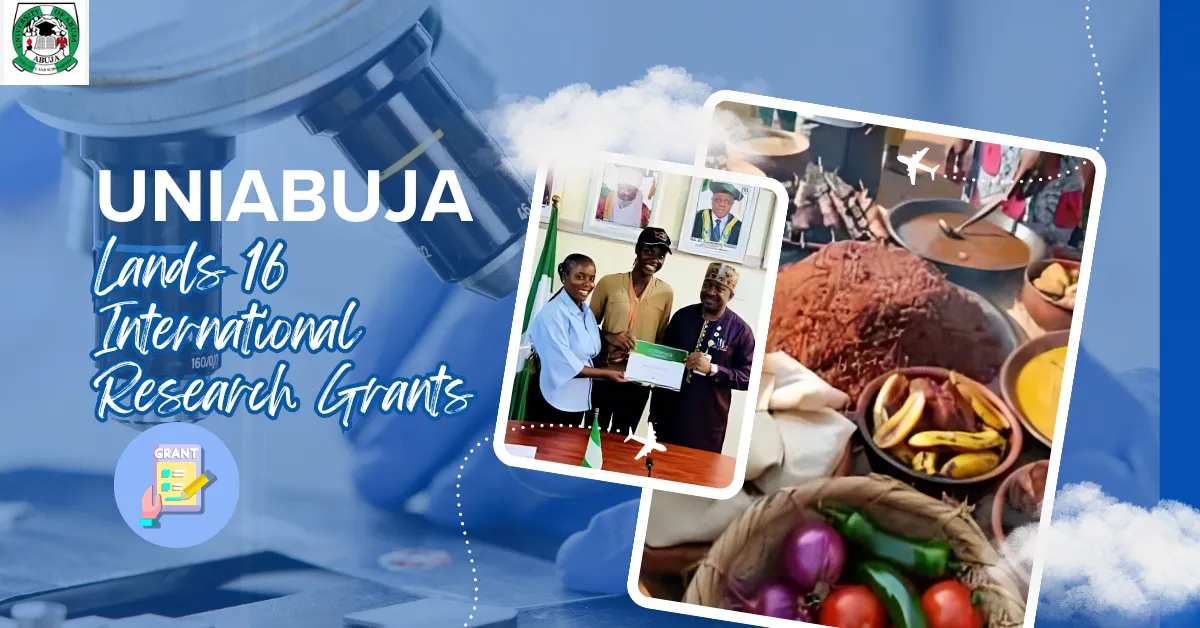
The University of Abuja is hosting 16 ongoing international research grants from organisations including the US National Institutes of Health, the World Bank, the European Union, Innovate UK and the United Kingdom's National Institute for Health and Care Research, placing the institution at the centre of efforts to develop African led solutions to local challenges.
These projects connect University of Abuja researchers with global institutions such as Johns Hopkins University, King's College London, Northwestern University, New York University, Coventry University, Liverpool School of Tropical Medicine and Washington University in Saint Louis.
Vice Chancellor Professor Hakeem Babatunde Fawehinmi stated that the scale and diversity of the research show that funders trust the university's scholars to lead work that matters, adding that solutions to Africa's challenges can and must come from Africa.
Seven of the projects focus on sickle cell disease, an area where Nigeria carries the world's highest burden, with millions affected and thousands of children born with the condition yearly. These include PACTS, an NIHR funded project on patient centred sickle cell management, and SPARCNET, an NIH backed consortium strengthening research collaboration across Africa.
Notably for students, SPARCTRAIN is dedicated to developing the next generation of African sickle cell researchers, offering a direct pathway for young Nigerians interested in research careers. Professor Obiageli Nnodu, who leads much of this work as Director of the Centre for Sickle Cell Research and Training in Africa, disclosed that the university trains professionals in clinical research, clinical trials, database management and genetic counselling.
The university's research also extends to hypertension, often called the silent killer, through five internationally funded studies, including ADHINCRA, a collaboration with Johns Hopkins University. Professor Dike Ojji, who leads the cardiovascular research programme, said the focus is shifting Nigeria's health system toward a more proactive, prevention based model.
Beyond health, research interests span climate adaptation for smallholder women farmers, agricultural innovation transfer and a World Bank supported programme led by Professor Hauwa Imam to strengthen technical and vocational education for young Nigerians entering the workforce.



Leave a Reply