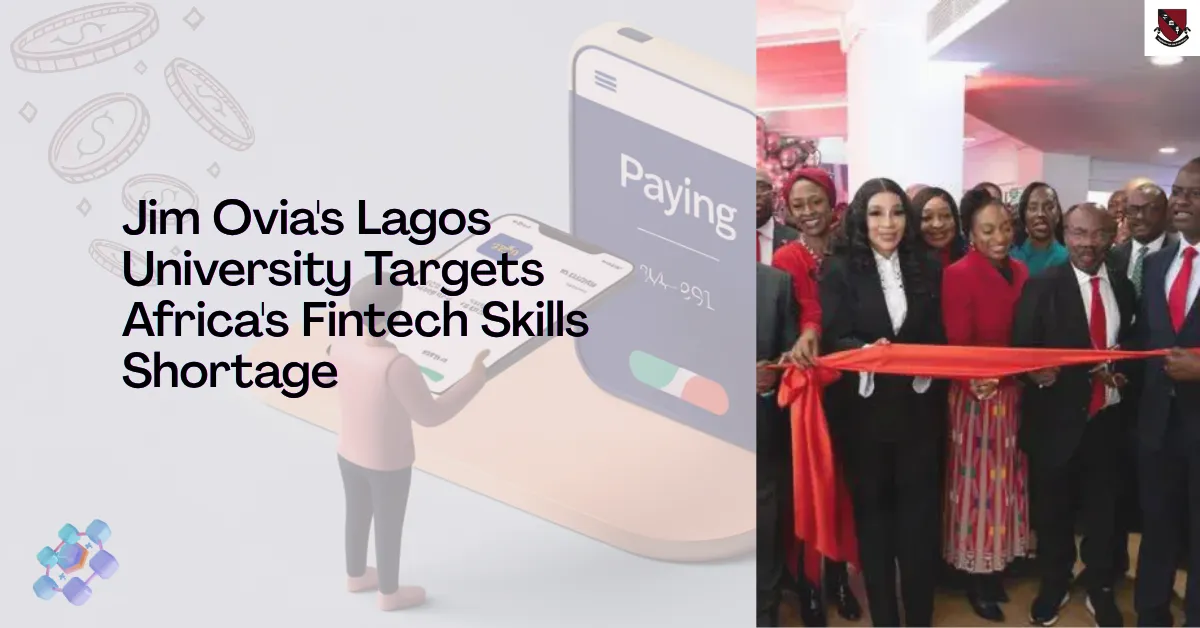
James Hope University, located in Lekki, Lagos, has unveiled three flagship postgraduate programmes built around Artificial Intelligence, digital transformation, and practical skills development, as the Institution reinforces its position as Nigeria's only exclusively Postgraduate University.
The programmes, which cover Innovation, Intrapreneurship and Entrepreneurship; Fintech and Analytics; and Economic Development and Policy Analysis, are designed to deliver measurable employability outcomes and a clear return on investment for students, according to the institution's President and Vice Chancellor, Prof. Olu Akinkugbe.
Akinkugbe noted that operating without undergraduate programmes gives the institution a structural advantage. "Without the demands of undergraduate programmes, we have the singular advantage of depth, immersing our students and faculty in innovative discourse, applied research, industry driven curricula, and experiential learning," he stated.
The Innovation, Intrapreneurship and Entrepreneurship programme draws directly from the experience of the University's founder, Jim Ovia, CFR, who established Zenith Bank. "This programme therefore teaches not abstract theory, but the practical, tested principles of creating value, fostering innovation within existing organisations through intrapreneurship, and building enduring ventures through entrepreneurship. While Nigerians see excellence in Zenith Bank, here at JHU, they see where that excellence is built," Akinkugbe disclosed.
On the Fintech and Analytics programme, the Vice Chancellor revealed that the university is in advanced discussions with the University of Texas at Dallas and two other institutions in Canada and East Asia to establish a cross collaboratory technology lab. "The proposed lab is not merely an infrastructure project. It is a skills to employment pipeline that will deliver measurable outcomes," he stated, describing Nigeria as Africa's largest and most dynamic fintech hub.
The Economic Development and Policy Analysis programme, he explained, "is designed to address Africa's most pressing developmental challenges," equipping policymakers and economists with analytical tools to design and implement transformative economic policies.
The University's facilities include a state of the art Library, an innovation hub, a Research Lab, and a hybrid teaching infrastructure. All programmes combine core academic staff with industry practitioners and are designed for immersive and industry residency learning.



Leave a Reply