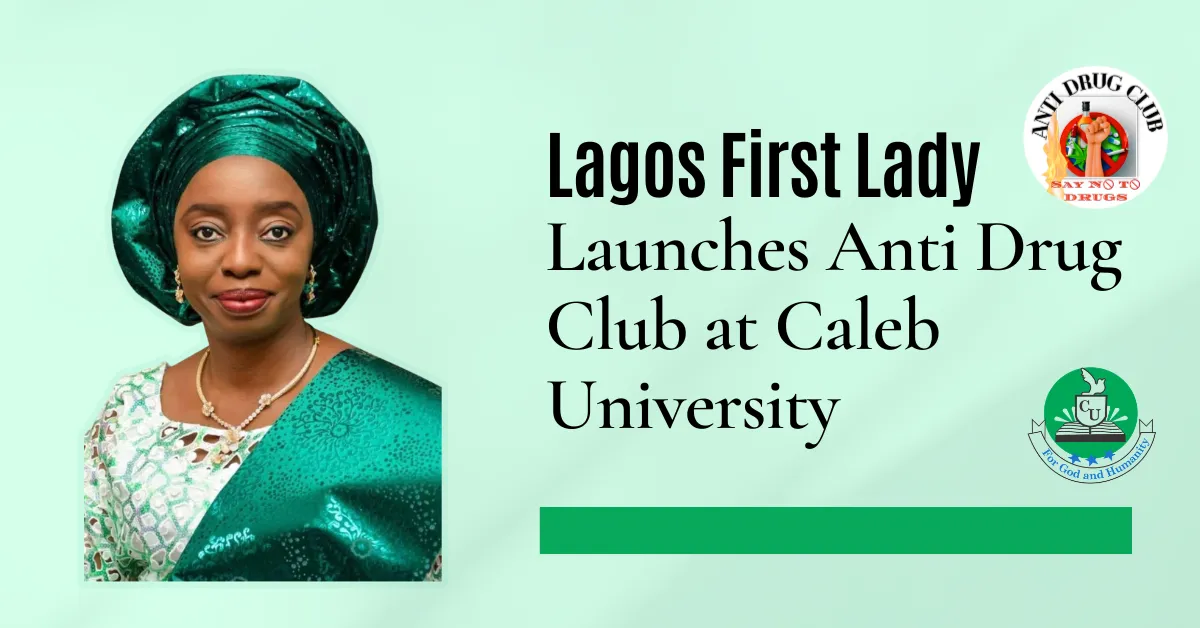
Caleb University in Imota became the latest Lagos institution to host a major anti drug awareness campaign last week, as the First Lady of Lagos State, Dr Ibijoke Sanwo Olu, led advocacy sessions, a campus walk and the inauguration of a student led anti drug club to mark the 2026 International Day Against Drug Abuse and Illicit Trafficking.
Dr Sanwo Olu warned that substance abuse had evolved into a serious public health and social threat, urging students to make deliberate choices. "Drug abuse is destroying health, productivity and life chances of young people," she stated, charging them to "choose life, choose discipline, choose purpose."
She emphasised that addiction does not discriminate. "Addiction cuts across age, gender and background. Victims need support, not condemnation," she added.
The First Lady disclosed that her office had deepened partnerships with the National Drug Law Enforcement Agency, non governmental organisations, faith groups and local authorities to broaden awareness efforts across Lagos. She referenced similar campaigns held at Lagos State University and the University of Lagos in 2025, which she noted reached thousands of students.
At the event, she inaugurated the Caleb University War Against Drug Abuse Club and unveiled campus advocacy materials. "We are building a network of young ambassadors who will champion a drug free society," she noted.
Wife of the Deputy Governor, Mrs Oluremi Hamzat, stressed that drug prevention demanded coordinated commitment across all sectors. "We must work together, parents, schools, faith leaders and government, to raise responsible and focused young people," she said.
Vice Chancellor of Caleb University, Professor Olalekan Asikhia, reaffirmed the institution's commitment to a drug free campus, arguing that universities bear a responsibility beyond academics. "Institutions must shape character as well as knowledge," he disclosed.
Deputy Commander of Narcotics at the NDLEA Lagos Strategic Command, Titilope Ogunluyi, identified peer pressure, trauma, unemployment and poor supervision as key drivers of drug abuse among young people, while highlighting the legal consequences of drug related offences.
Addiction recovery advocate David Folaranmi drew on personal experience to underscore the long term emotional and social toll of substance dependence. "Behind every statistic is a human story," he revealed, calling for stronger investment in prevention, rehabilitation and community support.



Leave a Reply