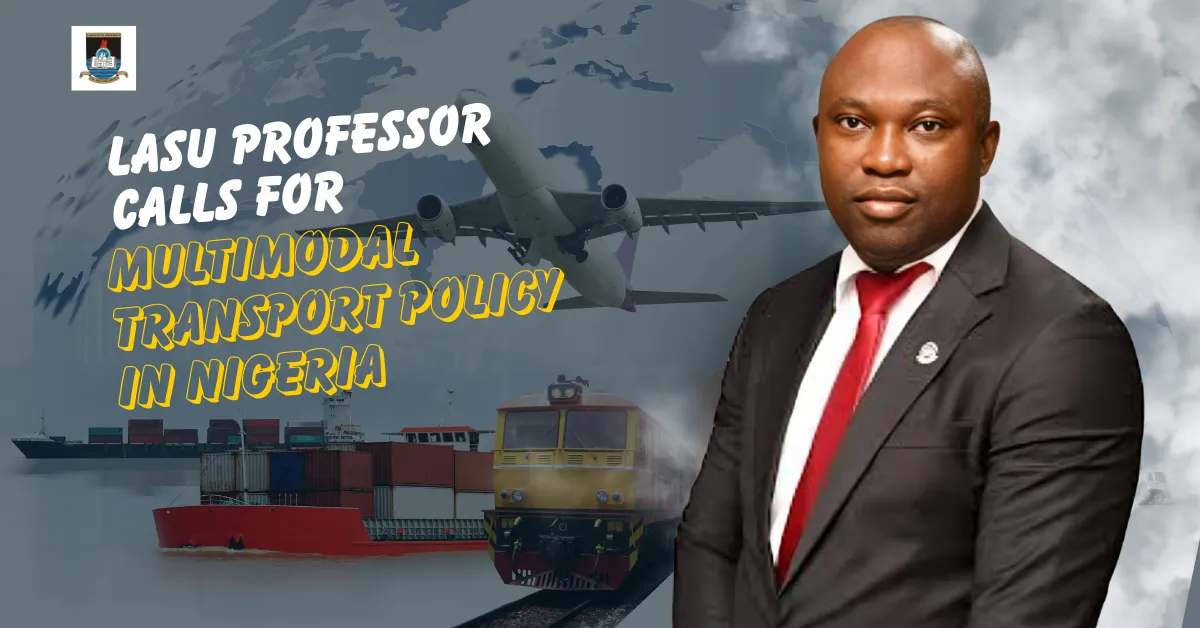
More than 15,537 Nigerians died in road traffic crashes between 2021 and the second quarter of 2023, while 93,000 others sustained injuries within the same period, a Lagos State University Professor has revealed, as he called for an urgent overhaul of the country's transport governance framework.
Charles Ojima Asenime, a Professor of Transport, Mobility and Development at LASU, made the call while delivering the 122nd inaugural lecture of the university, titled "Who Is This Agbero? Catechising the Role of Informality and Non State Actors in Nigeria's Transport System and Development."
Asenime argued that the absence of coordinated transport planning and weak enforcement had deepened road crashes, insecurity, arbitrary fare regimes, poor infrastructure and rising costs of doing business across the country. He called for the adoption of an integrated multimodal national transport policy to be implemented by an inter ministerial committee.
Citing data from the Federal Road Safety Corps, the Professor attributed the high crash figures largely to motorcycles and minibuses, noting their informal operational structure, poor training and weak adherence to traffic regulations as key contributing factors.
He disclosed that informal transport operators remain indispensable to daily mobility, stating that 80% of Nigerians would struggle to move around without commercial buses, tricycles, motorcycles and informal inland water transport operators. Despite this, the sector remained largely unregulated, unsafe and inefficient.
The professor also raised concerns about motor parks across the country, describing them as chaotic, unsafe and visually degrading, lacking shelters, waiting areas and sanitation facilities. He flagged rising cases of molestation, insecurity and robbery linked to informal transport operations in major urban centres, warning that women and vulnerable commuters remained particularly exposed.
On inland waterways, Asenime disclosed that more than 300 people died in boat mishaps between 2023 and 2025 due to overloading, lack of life jackets, night travel, and poor maintenance. He noted that the sector contributed only 1.6% to Nigeria's Gross Domestic Product, and that Lagos remained the only state with a functional water transport regulatory authority.
Speaking on the sidelines, Nigerian Railway Corporation Managing Director Kayode Opeifa commended Lagos State for moving 3.5 million passengers through the Blue Line rail corridor in 2025. "The future of transportation in Nigeria lies in stronger collaboration among government Institutions, academia, regulators and operators across all modes of transport," he stated.
Leave a Reply