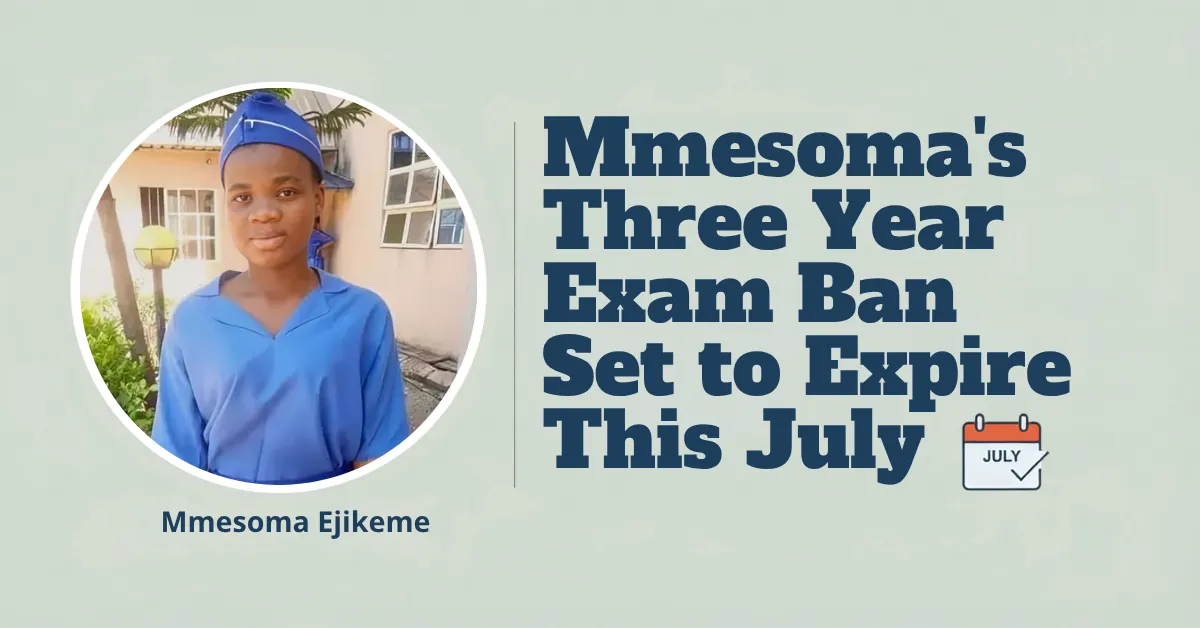
The three year examination ban imposed on Anambra student Ejikeme Mmesoma following one of Nigeria's most prominent result falsification scandals is due to expire this month, making her eligible once again to register for the Unified Tertiary Matriculation Examination.
Mmesoma became the subject of national attention in July 2023 after she claimed to have scored 362 in the UTME, a result that would have placed her among the country's highest performing candidates. The claim drew initial public sympathy, but the controversy deepened after the examination body declared the result she presented fraudulent, insisting her authentic score was 249.
The board alleged that Mmesoma manipulated her result using her mobile phone before printing a forged copy at a cybercafé, pointing to discrepancies in her registration number, date of birth, examination centre and result slip format. It also noted that the notification template she used had been discontinued since 2021.
The Anambra State Government subsequently constituted an independent panel of inquiry chaired by Prof Nkemdili Nnonyelu. In its report released on July 8, 2023, the panel confirmed that Mmesoma's actual score was 249 and that she had personally altered the result using her Airtel mobile phone before taking it to a cybercafé for printing. The panel added that she acted alone and apologised to the examination board, the state government and her school.
Following the panel's findings, the board withdrew the forged result and announced the three year ban. "The management of the Board, after considering the weighty infraction committed by Ms. Ejikeme Joy Mmesoma, and in line with its established procedures, has withdrawn her 2023 UTME result and also barred her from sitting the Board's examination for the next three years," spokesman Fabian Benjamin said at the time.
The scandal carried significant consequences. Innoson Vehicle Manufacturing withdrew a scholarship it had earlier awarded her; her father, Romanus Ejikeme, publicly apologised, and Governor Chukwuma Soludo directed that she undergo three months of psychotherapy and counselling.
With the ban set to lapse this July, Mmesoma may now choose to pursue tertiary institution admission. Her case remains frequently cited in discussions on examination ethics and the consequences of academic dishonesty in Nigeria.
Leave a Reply