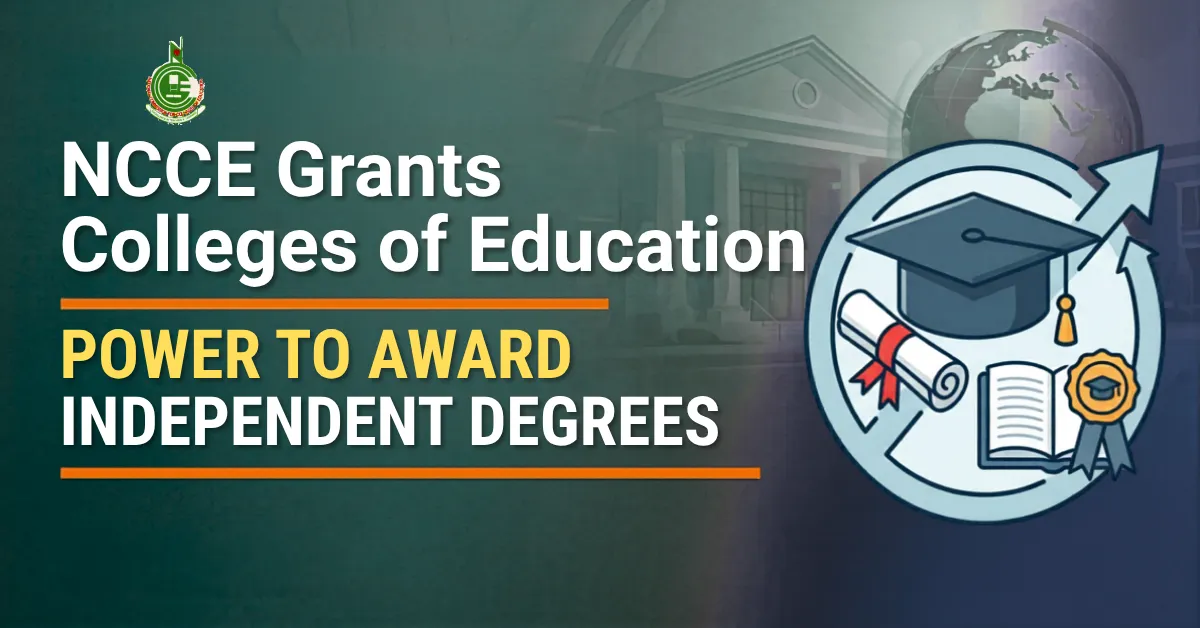
Colleges of Education in Nigeria can now independently award bachelor's degrees in education without affiliating with any university, the National Commission for Colleges of Education has announced, marking a significant shift in the country's teacher education framework.
NCCE Executive Secretary Angela Ajala disclosed on Friday during a media parley at the commission's headquarters in Abuja, themed "A New Dawn for Teacher Education in Nigeria."
Ajala clarified that the reform, anchored on the Federal Colleges of Education Act No. 132 signed into law by President Bola Tinubu on 24 July 2023, would take full effect from the 2026/2027 academic session. "Qualified Colleges of Education can now award independent degree programmes in addition to the NCE, without being affiliated to any university in the country," she stated.
Under the new Dual Mandate Policy, qualified federal institutions will run both the three year Nigeria Certificate in Education and a two year degree component concurrently. The commission has already forwarded a draft curriculum to the National Universities Commission to ensure the degrees awarded are at par with those from conventional universities.
Ajala noted that the reform would expand access to higher education, ease pressure on university admissions, strengthen teacher specialisation, and attract more candidates into the profession. State and private colleges of education will also be permitted to implement the policy once they domesticate the reform framework.
The NCCE boss stressed that the changes did not diminish the identity of colleges of education. "The Dual Mandate is not about making Colleges of Education lose their identity. It is about strengthening that identity. It is about saying that teacher education must no longer be treated as a lower pathway," she remarked.
Ajala also confirmed that the commission was in active discussions with relevant agencies on a more flexible admission framework, particularly for the NCE, following the Joint Admissions and Matriculation Board's recent exemption of colleges of education from the Unified Tertiary Matriculation Examination. "The goal is simple: We want to remove administrative barriers, not professional standards," she added.
Beyond degree awards, the executive secretary disclosed that the teacher education curriculum was being redesigned to incorporate digital literacy, artificial intelligence awareness, entrepreneurship, inclusive education, emotional intelligence, STEM education, and competency based learning.
The commission also announced a broader institutional shift, moving from a compliance focused regulator to a development driven agency concerned with learning outcomes and classroom impact.


Leave a Reply