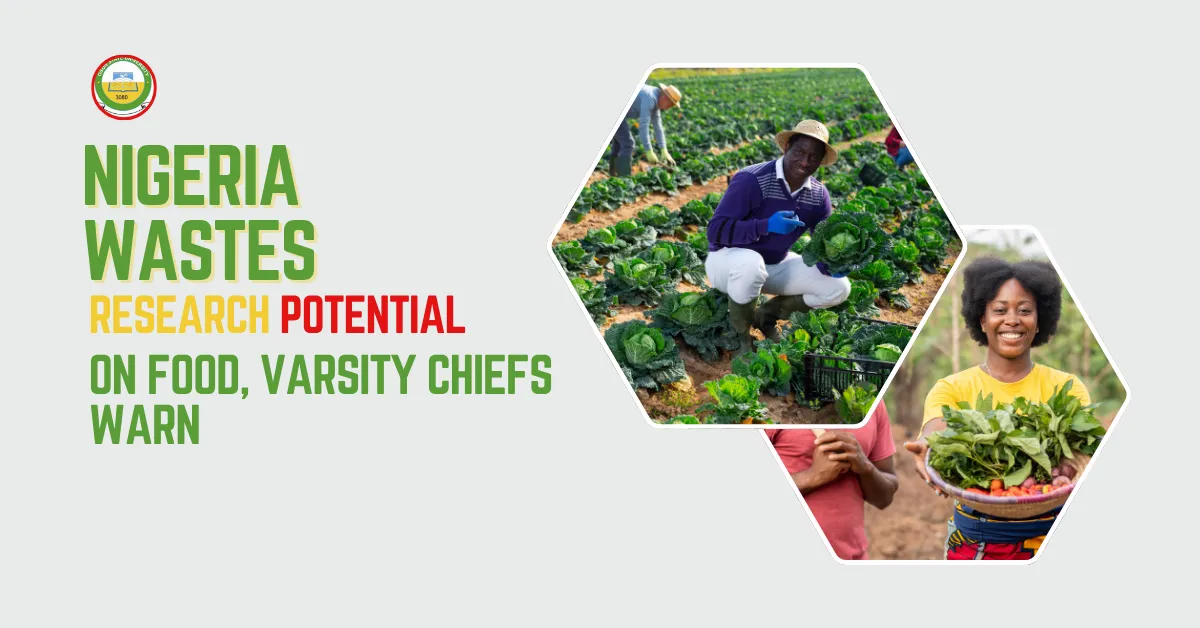
Osun State University and the Nigerian Institute of Food Science and Technology have jointly called for a fundamental shift in how agricultural and food technology innovations are developed and commercialised, warning that Nigeria's failure to convert research into enterprise remains a key driver of food insecurity.
The call came during the 12th Regional Food Science and Technology Summit held at UNIOSUN's main campus in Osogbo, themed "Transforming Food Research into Enterprise for Sustainable Development."
Vice Chancellor Prof. Clement Adebooye noted that Nigeria's abundant agricultural resources and research talent had not translated into commercial impact, pointing to the gap between laboratory outputs and real world application as a critical national problem.
"The future of every nation is strongly connected to its ability to feed its population sustainably, create economic opportunities through innovation, and harness scientific discoveries for industrial and societal advancement," Adebooye stated.
He added that "food science and technology remain critical pillars in addressing food insecurity, malnutrition, unemployment, post harvest losses, and economic instability. As professionals and stakeholders in this field, we must continue to bridge the gap between research findings and real life applications."
Adebooye further observed that "Nigeria is richly blessed with abundant agricultural resources, vibrant youths, and talented researchers. However, one of our greatest challenges has been the inability to sufficiently commercialise research outputs and convert innovations into viable enterprises that can create jobs, improve livelihoods, and strengthen national development."
NIFST Chairperson Prof. Bolanle Akinwande described the summit as marking a paradigm shift for food industries in Nigeria, noting that decades of laboratory breakthroughs had yet to reach the marketplace at scale.
"A resilient food system demands that we bridge the gap between academia and the marketplace," Akinwande stressed, adding that summit sub themes covering technology transfer, circular economy approaches, and regulatory compliance were designed to push that transition forward.
She disclosed that NIFST's Western Chapter would deploy the 12th summit as a regional platform to champion food safety standards, ensuring products are market ready, nutritious, and compliant with global benchmarks.


Leave a Reply