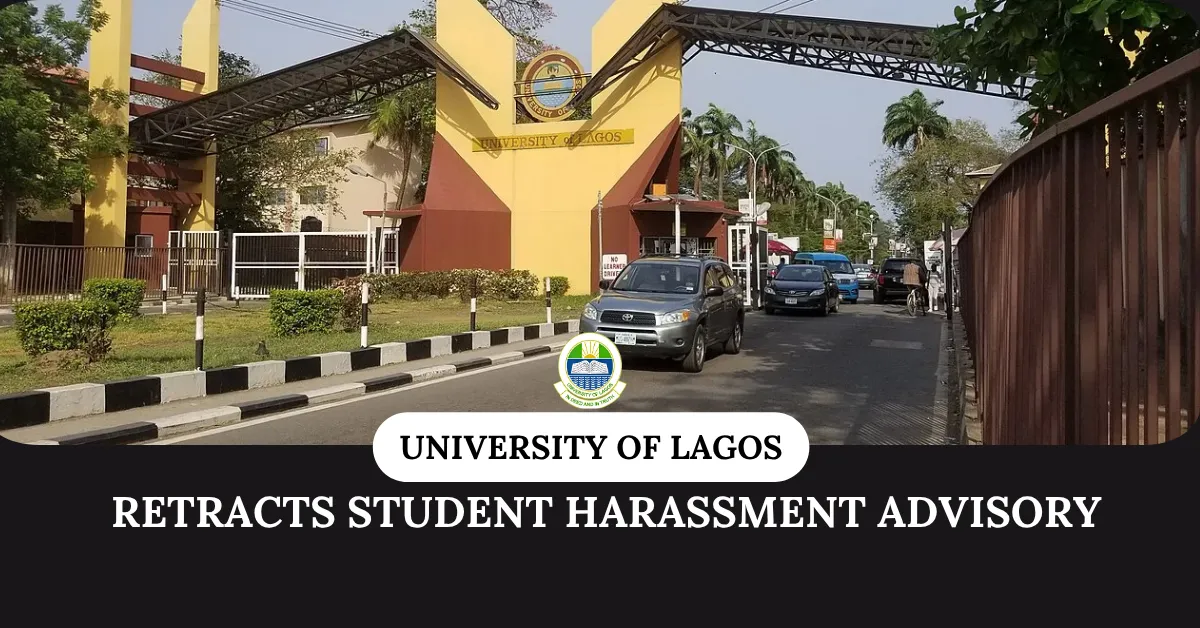
The University of Lagos has pulled a sexual harassment advisory issued by its Student Affairs Division after the document drew widespread condemnation for directing women to modify their behaviour to avoid being harassed or raped.
The university confirmed the withdrawal in a statement issued by the Head of its Communication Unit, Adejoke Alaga Ibraheem, on Monday. The institution acknowledged that the advisory originated from the Student Affairs Division but said its contents did not reflect the values, position or standards of the university.
The controversy stemmed from a roll up banner titled "Counselling Tips for Ladies to Avoid Sexual Harassment/Rape," which was circulated online and attracted immediate public criticism.
The banner contained several messages directed exclusively at female students, including "Do not dress to kill," "Your dress is your address," "Do not shake hands anyhow with any man," and "Do not mingle carelessly with men." It also advised women against staying alone with a man in a hidden place, accepting frequent gifts from men, seeking unnecessary favours from men, watching pornographic films or pictures, or accepting intoxicants. Women were further urged to remain vigilant when served drinks and to "learn to say no."
Critics questioned why the burden of preventing sexual harassment was placed on potential victims rather than perpetrators, with the backlash prompting the university to act.
In its statement, the institution conceded that placing responsibility on victims or suggesting that individuals bear blame for harassment directed at them was "entirely unacceptable and contrary to the core values of our institution."
The university added: "The University of Lagos wishes to state unequivocally, and for the record, that we do not tolerate rape or sexual harassment in any form, nor do we validate, engage in, or support victim blaming or shaming. Sexual harassment is a serious misconduct that has no place in our community and must never be trivialised. We also recognise that sexual harassment is not gender specific and can affect anyone. We, therefore, encourage any student who has experienced or witnessed sexual harassment to utilise the University's official, confidential reporting structures to ensure immediate investigation and support."

Leave a Reply