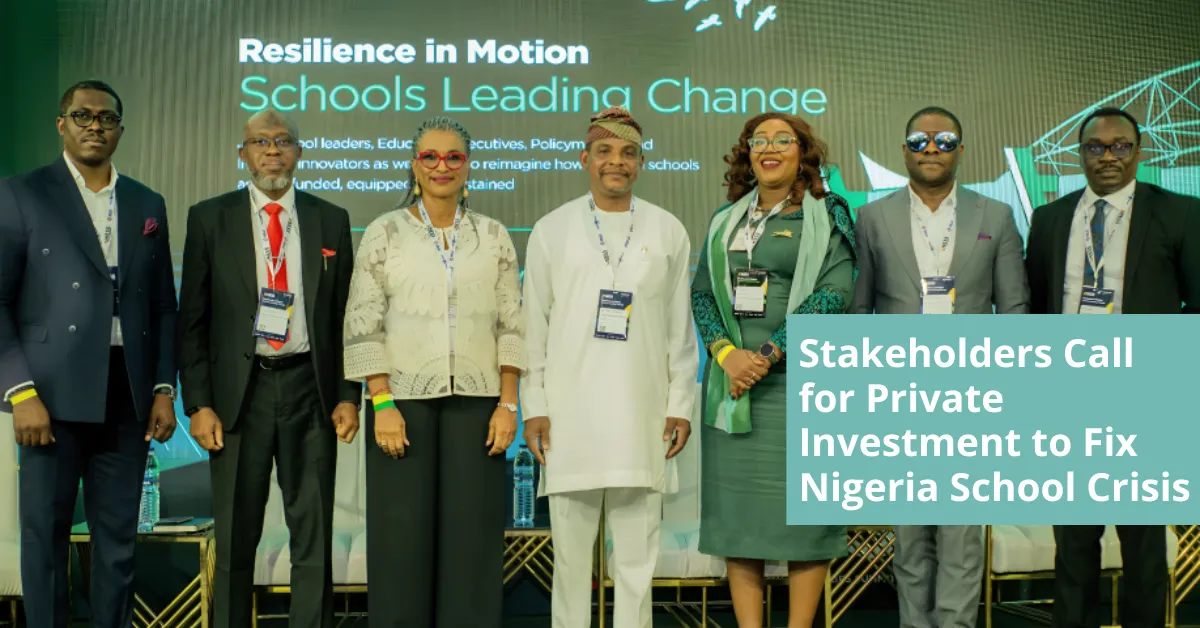
Education leaders and policymakers have called for stronger public private partnerships to address rising operating costs, teacher shortages, and the growing demand for digital learning in Nigerian schools.
The calls were made at the Nigeria Educational Supplies Summit 2026 in Lagos, where stakeholders agreed that building a resilient education system requires sustained investment and long term collaboration rather than reliance on government funding alone.
Lagos State Commissioner for Basic and Secondary Education, Jamiu Tolani Alli Balogun described education as a capital intensive sector that cannot achieve lasting transformation without greater private sector participation.
"We need assistance majorly from private investors. Whatever we do must factor in sustainability. It is not about introducing programmes that disappear after two or three years, but policies that align with global best practices and stand the test of time," he said.
Enugu State Commissioner for Education, Ndubueze Mbah, who delivered the keynote address, urged stakeholders to move beyond policy discussions and focus on practical reforms that improve learning outcomes. Speaking on the summit's theme "Resilience in Motion: Schools Leading Change," Mbah said schools must shift from policy to practice by embracing experiential learning and equipping students with skills required for the future workforce.
The Special Adviser to the Minister of Education on STEMM and Corporate Sector Engagement, Adetola Salau, cautioned that technology alone could not improve education without adequately trained teachers.
"You can have a fantastic computer lab, but if you don't have teachers who are trained, forget it," she said.
Salau urged schools to prioritise teacher training and encourage experienced educators to mentor colleagues. She also called for greater female participation in science, technology, engineering and mathematics, noting that women currently account for only 35% of STEM graduates nationwide.
Speakers across the summit repeatedly stressed that sustainable financing was becoming as critical as curriculum reform in preparing students for a rapidly changing economy.


Leave a Reply