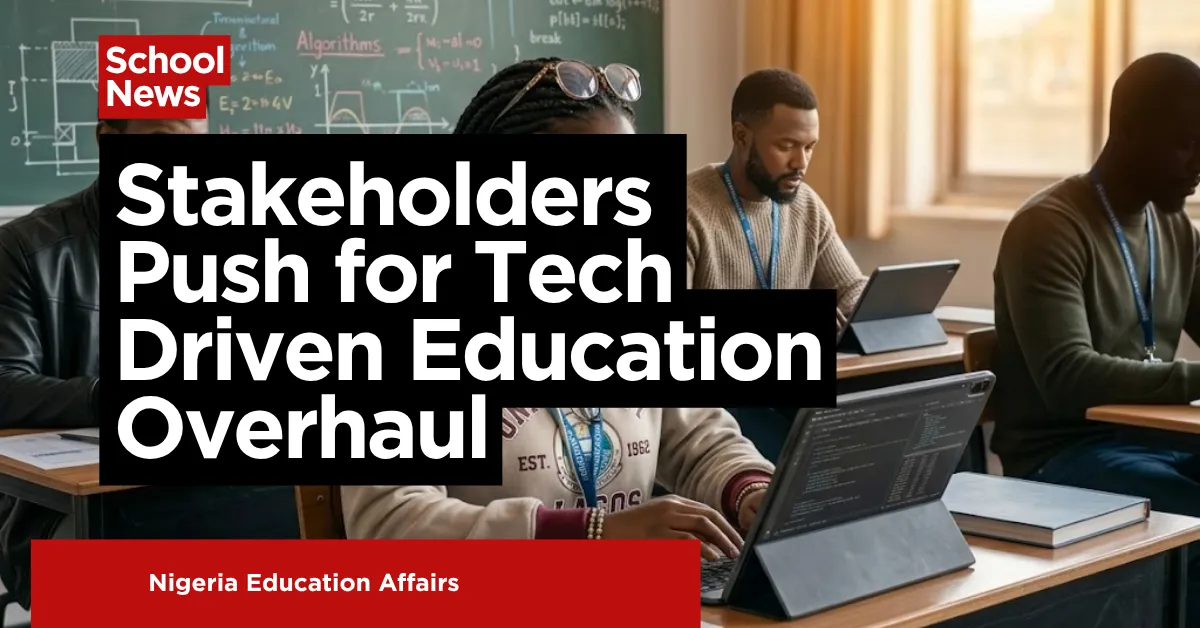
Nigerian education stakeholders have called for urgent reforms to the country's learning system as artificial intelligence, automation, and clean energy technologies continue to reshape industries and redefine the global workforce.
Findings by The Nigeria Education News reveal that while nations across the world are channelling resources into research, technology education, and entrepreneurial development, many Nigerian Institutions remain constrained by outdated curricula, inadequate infrastructure, and limited access to practical innovation opportunities.
Innovation experts argue that the future will not be determined by technological advancement alone but by the readiness of individuals and institutions to embrace creativity, critical thinking, and problem solving. They maintain that every transformative invention originates from a single question: how can we solve this problem?
The rapid emergence of robotics, smart systems, and artificial intelligence is already altering how people live, work, and learn. Analysts note that educational institutions face growing pressure to move beyond rote memorisation and equip students with digital competence, adaptability, and collaborative skills suited to an innovation driven economy.
Stakeholders further stress that innovation should not be regarded as the exclusive domain of scientists or engineers. Rather, they describe it as a mindset that empowers individuals across all disciplines to identify gaps and develop practical solutions that improve everyday lives.
Amid these challenges, observers point to growing momentum within Nigerian universities and technology hubs, where young people are building solutions targeting healthcare delivery, agricultural productivity, financial inclusion, and educational access.
Some universities have begun establishing entrepreneurship programmes, technology incubation centres, and industry partnerships to foster innovation. However, analysts insist that such efforts must be scaled significantly so students across all fields of study can benefit.
Education experts also underline the critical role of government support, arguing that consistent funding, improved infrastructure, and favourable policies are necessary for nurturing a new generation of problem solvers.
Industry leaders add that meaningful innovation requires calculated risk. Many breakthrough solutions, they note, emerged because individuals challenged conventional thinking, tested new approaches, and persisted through failure.
With Nigeria's youthful population representing a significant untapped asset, experts warn that failure to harness this potential could deepen the country's gap with nations already thriving in the global innovation economy.
The decisions Nigeria makes today regarding education, research, and the empowerment of creative minds, stakeholders conclude, will determine the nation's place in tomorrow's world.


Leave a Reply