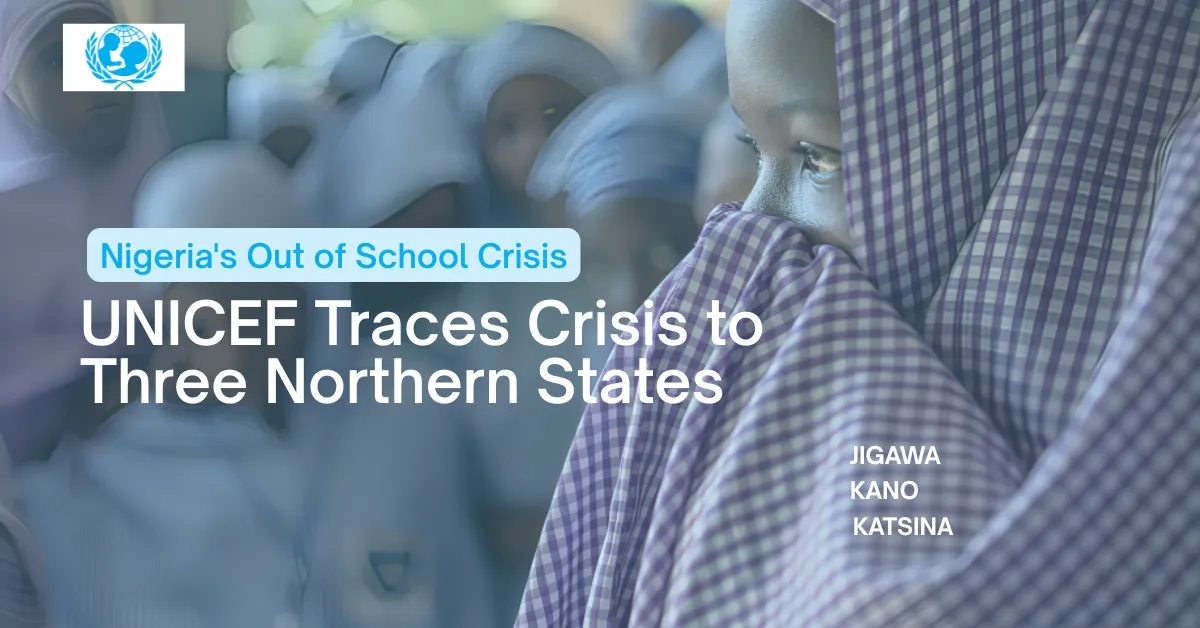
Three northern states account for a significant share of Nigeria's 18.3 million out of school children, the highest figure recorded anywhere in the world, as education experts warn that without urgent investment in early childhood learning, the crisis will deepen.
Aisha Abdullahi, an education consultant with the UNICEF Kano Field Office, made this known on Sunday while presenting a paper on foundation learning and skills development at a two day dialogue for journalists from Jigawa, Kano and Katsina States. She stated that the three states contribute 30% of Nigeria's total out of school children figure, driven by poverty, insecurity, cultural barriers and poor school readiness.
Abdullahi maintained that Early Childhood Care, Development and Education represents the most strategic long term solution to the crisis, arguing that the focus must shift from reactive interventions to preventive approaches.
"Early childhood education is not just a preparatory stage but a strategic intervention to reduce the number of out of school children," she stated.
She noted that ECCDE targets children from birth to age five, equipping them with cognitive, emotional and social skills required for formal schooling. Children exposed to early learning are significantly more likely to enrol, remain in school and complete their education, while those who miss such opportunities are twice as likely to drop out.
Abdullahi also cited research indicating that 90% of brain development occurs before age five, making early intervention critical. She observed that despite provisions incorporating one year of pre primary education into Nigeria's Universal Basic Education framework, access to ECCDE remains limited, particularly in rural communities. Areas with functional ECCDE centres record 40% higher enrolment into Primary One alongside improved retention rates.
The UNICEF expert further noted that early childhood education plays a role in advancing girls' education by helping delay societal pressures such as early marriage and by strengthening parental engagement, particularly among mothers.
Stakeholders at the dialogue expressed concern over low father involvement in early learning, revealing that fewer than 15% of fathers actively participate across the region. They noted that increasing male involvement could reduce dropout rates by 50%, given fathers' influence over household decisions, and recommended community advocacy, mosque engagement and structured father to child programmes.
Participants called for ECCDE expansion across all primary schools, allocation of at least 5% of education budgets to early learning, more teacher training and integration of traditional and religious education systems into the framework.



Leave a Reply