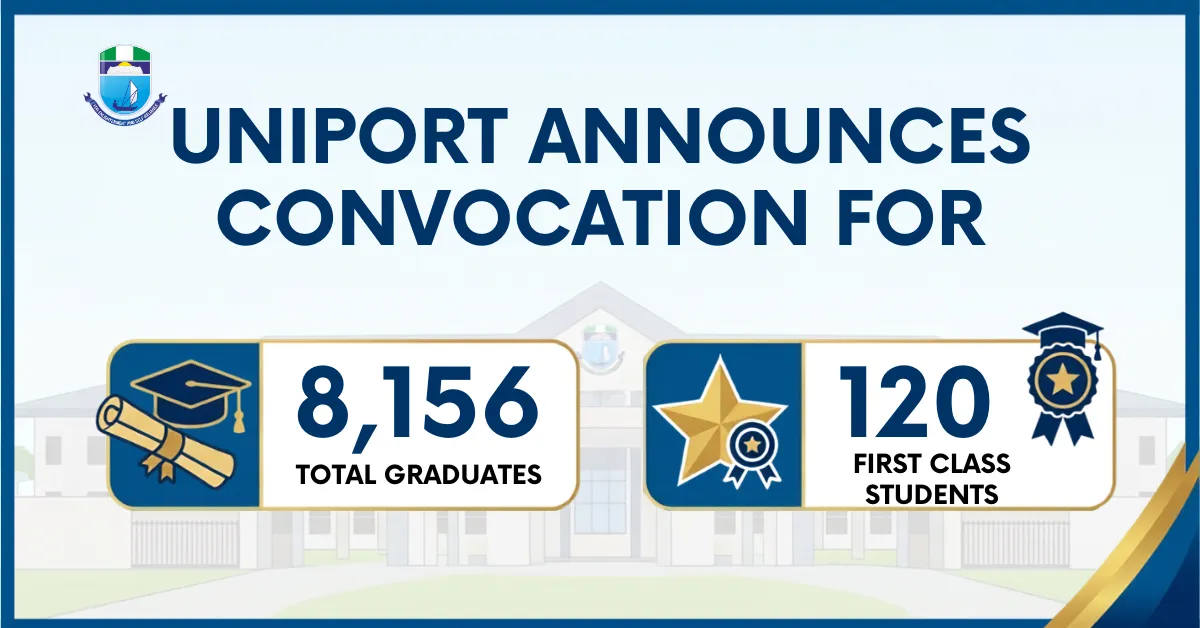
The University of Port Harcourt will confer degrees on 8,156 students, including 120 first class graduates, during its 36th combined convocation scheduled for June 5 and 6.
The Vice Chancellor, Professor Owunari Georgewill, disclosed this during a media briefing at the institution, outlining key figures and activities planned for the ceremony. He described the event as a major academic milestone that reflects the university’s commitment to excellence.
Of the total graduands, 5,822 will receive first degrees, 510 will be awarded postgraduate diplomas, 1,386 will earn Master’s degrees, and 438 will receive Doctor of Philosophy qualifications.
Georgewill stated, “The Convocation Ceremony is one of the most important academic traditions of the University. It is a period when we celebrate academic excellence, confer degrees and honours on deserving graduands, and showcase the achievements of the institution.
“We are delighted to announce that we are set to graduate a total number of 8,156 graduands, of which 510 are for the Post Graduate Diploma, 1,386 are for Master's Degrees, and 438 are for Doctor of Philosophy, respectively certified for graduation during the combined convocation ceremony.
“Among these graduands, we expect to graduate 120 first class degrees recipients, reflecting the university’s sustained commitment to academic excellence.”
Events lined up for the convocation include a tree planting ceremony by the best graduating student, class day activities, and a Vice Chancellor’s dinner. Alumni engagements, a research fair, and a fireside chat are also scheduled ahead of the main ceremonies.
Academic processions and the award of degrees will take place on June 5, followed by further proceedings on June 6 at the new convocation arena. The Minister of the Federal Capital Territory, Nyesom Wike, is expected to deliver the convocation lecture.
Reflecting on the institution’s journey, Georgewill stated, “The growth and accomplishments of the University of Port Harcourt are the results of visionary leadership, consistent governmental support, stakeholders’ engagement, and a relentless pursuit of excellence.”
He also highlighted infrastructure improvements supported by government interventions, while noting ongoing challenges including land encroachment, funding, and accommodation needs.



Leave a Reply