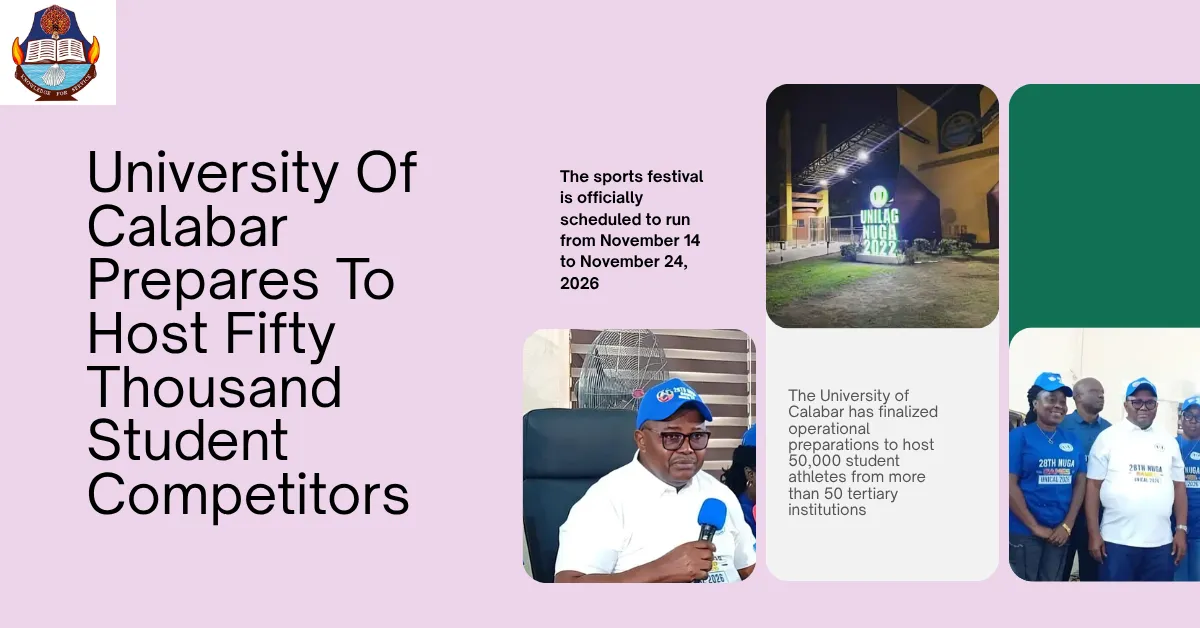
The University of Calabar has finalized operational preparations to host 50,000 student athletes from more than 50 tertiary institutions across the federation for the 2026 Nigeria Universities Games Association tournament. The massive gathering of collegiate sports talents marks the 28th edition of the biennial athletic festival, bringing together the largest network of tertiary competitors in West Africa to compete for top honors.
University Vice Chancellor Offiong Offiong disclosed the massive administrative arrangements during a specialized media brief on Friday in Calabar. The sports festival is officially scheduled to run from November 14 to November 24, 2026. According to tournament schedules released by the planning committee, participants will actively compete across 28 distinct sporting events during the ten day multi sport competition.
Campus administrators stated that hosting the tournament serves as a primary avenue to drive local infrastructure upgrade projects. The university head revealed that the management is constructing a modern sports complex as a signature legacy project for the games. The specialized training facility is designed to survive the tournament as a permanent center for molding future national and international athletic champions.
Security planners confirmed that deep technical collaborations are underway with state agencies to ensure a hitch free environment throughout the competitive cycle. The Institution leadership noted that while the regional capital maintains a reputation as one of the most peaceful urban centers in the country, comprehensive proactive safety protocols are being activated to protect all visiting delegations and international scouts.
The Institution has appealed directly to corporate bodies, federal departments, institutional alumni, and development partners to provide robust financial support for the event. The Vice Chancellor praised the Cross River State Government for its consistent operational partnership, while urging the central council of the association to maintain close technical cooperation as field preparations enter critical final phases. Historical records show that the tournament originally debuted at the University of Ibadan in 1966, while the host institution last held the hosting rights in 1990.



Leave a Reply