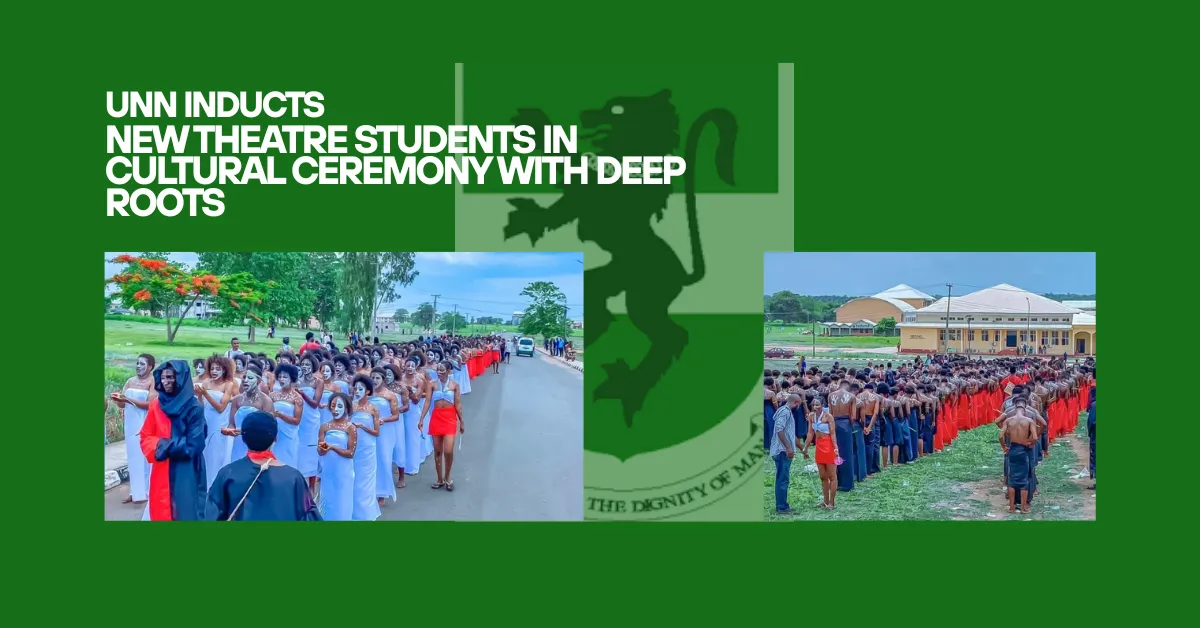
New students admitted into the Theatre and Film Studies programme at the University of Nigeria, Nsukka, have undergone an induction ceremony steeped in cultural symbolism, dramatic performance, and ritual procession, renewing a tradition that has shaped theatre education in Nigerian universities since the 1970s.
The ceremony, attended by freshers adorned in vibrant costumes, featured chants, coordinated dance, and a ceremonial procession around the campus. A ceremonial pot releasing aromatic smoke marked the occasion, underscoring the ritualistic character of an exercise designed to signal the students' formal entry into an artistic community.
The tradition of theatre induction ceremonies in Nigerian Universities gained momentum between the 1970s and 1990s, with pioneering institutions including the University of Ibadan, the University of Nigeria, Ahmadu Bello University, and the University of Calabar credited with spreading the practice. Early ceremonies were modest but incorporated dramatic performances, symbolic costumes, chants, and processions to foster solidarity and affirm the presence of theatre culture within university settings.
Seasoned film critic and actor Kelvin Udochukwu described the induction as a vital component of theatre training, arguing that the excitement of joining a department aligned with one's passion outweighs any negative interpretations of its ritualistic elements. He noted that induction content reflects the cultural context of the host institution. "During my time at the University of Nigeria, Nsukka, the costumes and chants reflected the rich Igbo culture. Had the university been located in the north or west, the expressions would resonate with the local culture. Induction serves as a cultural enlightenment exercise, igniting passion in each inductee," he stated.
Dr Ikechukwu Erojikwe, a senior lecturer in the Department of Theatre and Film Studies at UNN and a cultural researcher, described inductions as a profound exploration of theatre's foundational truths. "We are midwives of the soul, the doctors of the mind. New students must recognise the significant responsibilities they are about to embrace. Our role is to connect individuals' consciences to societal realities. Theatre transcends mere entertainment; it serves as a vessel for important teachings, akin to a worship leader preparing minds to receive deeper truths," he said.
Dr Erojikwe noted that students with a research orientation would engage with theatre performance critically, while those without such grounding might misread the ceremonies as fetish or diabolical. The ceremonies have faced some critique for elements that echo indigenous religious practices, though scholars continue to advocate for deeper engagement with African ritual aesthetics and theatre pedagogy.



Leave a Reply