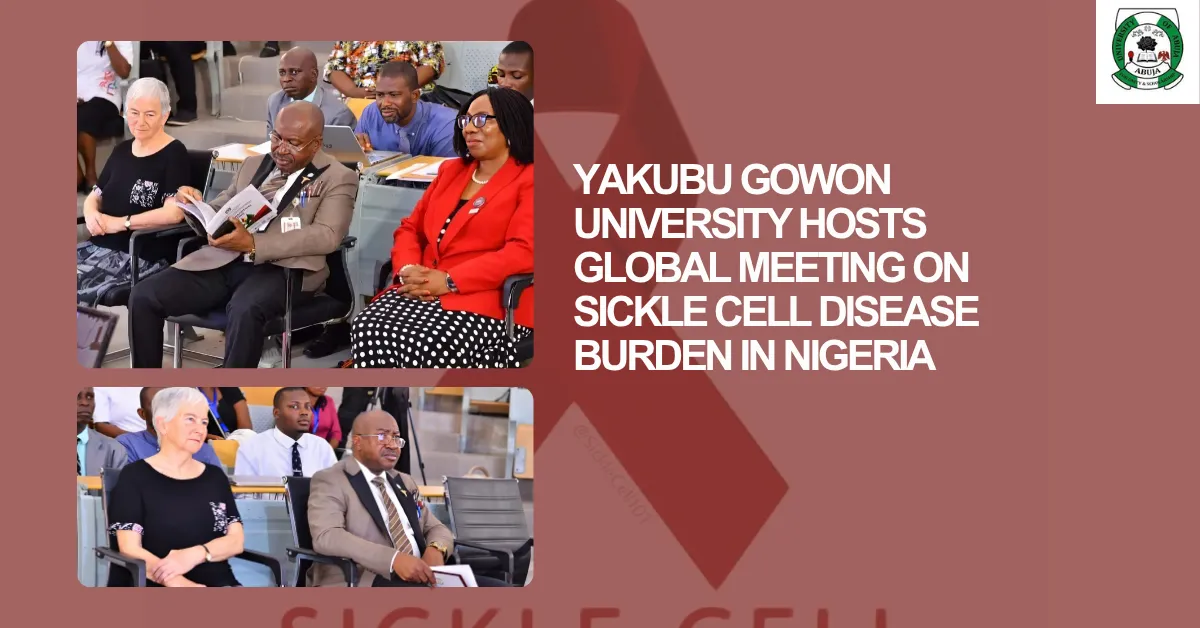
Researchers and health policy experts gathered at Yakubu Gowon University, formerly the University of Abuja, on Thursday for the Patient Centred Sickle Cell Disease Management in Sub Saharan Africa International Consortium Meeting, where calls were made for immediate policy action to address one of Nigeria's most persistent public health challenges.
The meeting, hosted by the University's Centre of Excellence for Sickle Cell Disease Research and Training, brought together investigators from Nigeria and international partner institutions to assess four years of community based, policy relevant research and chart a path toward implementation.
Vice Chancellor Professor Hakeem Babatunde Fawehinmi framed the moment as a turning point for the field. "As a medical doctor, I am fully aware of the enormity of this challenge. We are at a critical moment where research must translate into action that directly improves lives," he stated. He pressed stakeholders to move beyond discussion and commit to policy formulation, funding, and a focused roadmap for improving access to treatment in underserved communities.
Professor Obiageli Nnodu, Co Principal Investigator and Nigeria Country Lead, disclosed that CESTRA, established in 2015, has built a registry of 10,000 patients across 25 clinical sites in Nigeria through its Sickle PanAfrican Research Consortium. She noted that newborn screening programmes have already reached thousands of infants, demonstrating feasibility even in resource limited environments.
"Our goal is not just to conduct research, but to ensure that the knowledge generated leads to real improvements in patient care and informs national health policies," Nnodu stated.
Professor Imelda Bates of the Liverpool School of Tropical Medicine, a Co Principal Investigator in the project, stressed that families living with sickle cell disease frequently contend with stigma, financial pressure, and limited healthcare access. She disclosed that approximately 1 in 4 Nigerians carries the sickle cell gene, with 1.5% to 2% of the population living with the condition.
"We are working closely with patients and their families to understand their challenges and co create sustainable solutions that improve their quality of life," she said.
Bates also noted that structured safeguarding training has been embedded across partner Universities to ensure ethical and dignified care for vulnerable patients.



Leave a Reply