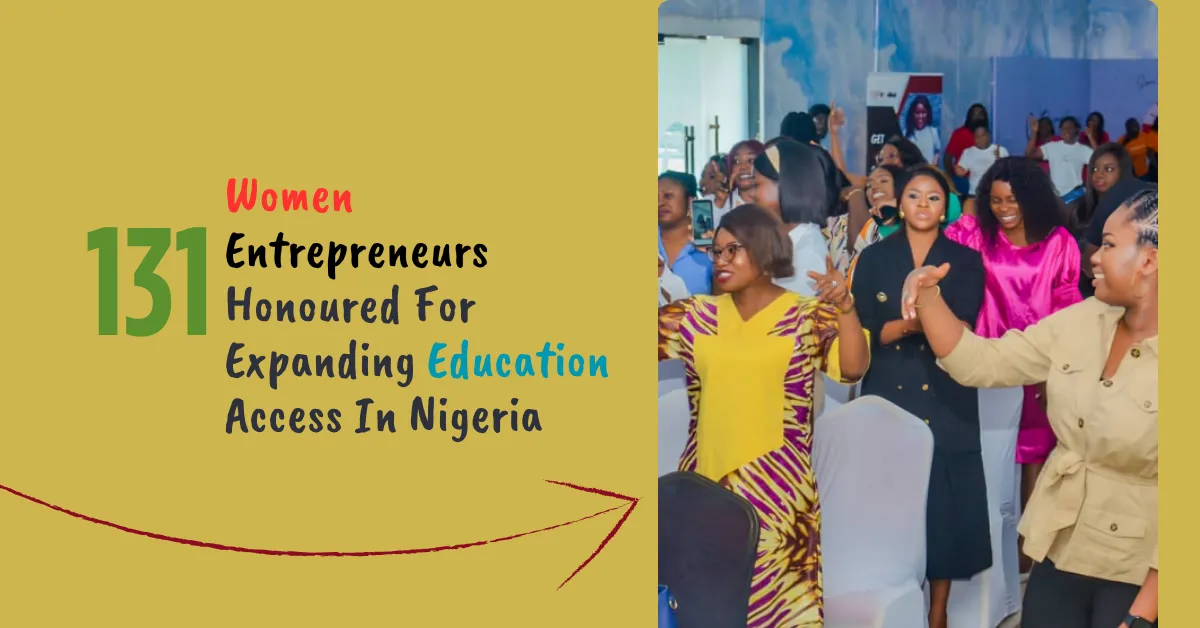
A national summit recognising 131 women who have built and sustained schools in low income communities across Nigeria is scheduled to hold on 10 June 2026 at Merit House, Abuja, with senior government officials and legislators expected in attendance.
The Centre for Educational Empowerment and Orientation, in collaboration with the National Council of Women Societies, is hosting the 2026 Women Led Education and Social Enterprise Impact Summit, themed "Empowering Women Social Entrepreneurs in Basic and Senior Secondary Education: Driving Policy Influence, Access to Finance and Institutional Support."
CEEO Executive Director Davidcrown Oyebisi briefed Journalists ahead of the event, describing it as a platform designed to document and celebrate the contributions of women entrepreneurs whose investments in education have largely gone unrecorded in national statistics.
NCWS National President Princess Edna D. D. Azura will chair the summit, while Dr Mariya Bunkure, Minister of State for the Federal Capital Territory, will attend as Special Guest of Honour. Senator Ireti Kingibe, Senator Natasha Akpoti Uduaghan, and Dr Adedayo Laniyi, Director General of the Maryam Babangida National Centre for Women Development, are also expected.
A central feature of the event will be the unveiling of a 200 page compendium documenting the journeys, achievements, challenges, and innovations of 131 women led schools serving children in underserved communities across Nigeria.
"The publication documents the journeys, achievements, challenges, innovations, and contributions of women led schools that continue to expand educational opportunities for thousands of Nigerian children," Oyebisi stated.
He added that the summit would serve as a platform for governments, development agencies, financial Institutions, foundations, corporate organisations, and philanthropists to direct investment toward women led schools serving the nation's most vulnerable learners.
Oyebisi emphasised that investing in women led education was a direct investment in the children least served by the formal education system, and that the compendium was designed to make the scale of that investment visible to policymakers and funders for the first time.


Leave a Reply