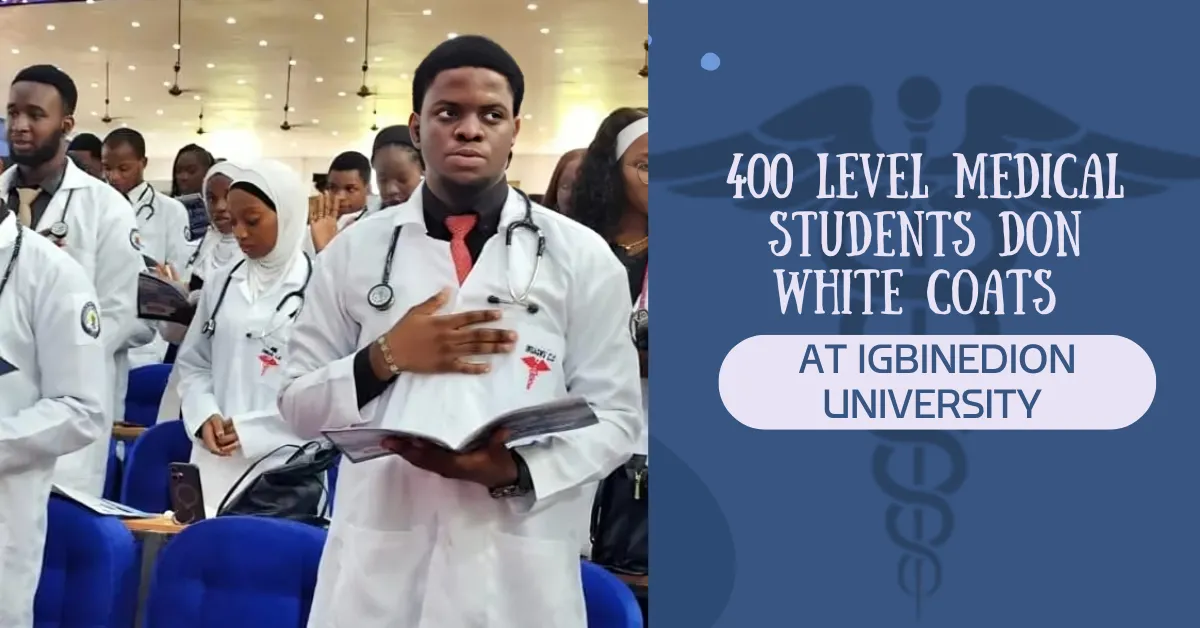
The moment a medical student puts on a white coat for the first time carries a weight that no examination result can fully prepare them for. At Igbinedion University, Okada, that moment arrived on Wednesday for a cohort of 400 Level students who are now cleared to enter wards, interact with patients and begin the clinical phase of their medical training.
The University's 8th White Coat Ceremony, held in Okada, Edo State, marked the formal shift from pre clinical to clinical study, a transition that faculty speakers were united in describing as far more than an academic milestone.
Vice Chancellor Prof. Lawrence Ezemonye set the tone early, telling the students that the coat they were putting on represented both privilege and obligation. "In medicine, pride is a poor prognosis for success," he said, urging humility over prestige. He warned against the tendency to rush through clinical training without absorbing its lessons. "Do not be in a hurry to graduate without learning. In the rush of modern medicine, the art of listening is dying, but it is often the best diagnostic tool," he said.
Prof. Ezemonye described the ceremony as a public declaration rather than a formality. "You are not merely changing your mode of dress; you are declaring your commitment to the art and science of medicine," he told the students, calling for strict adherence to integrity, punctuality and professional conduct in clinical settings.
Provost of the Oba Okunade Sijuwade Olubuse II College of Health Sciences, Prof. Dominic Osaghae, echoed that message, describing medicine as a profession that "demands time consciousness and proper conduct." He said the University had sustained the White Coat tradition specifically to impress upon students the gravity of what they were entering.
Dean of the School of Basic Clinical Sciences, Prof. Taiwo Balogun, placed the ceremony within a broader institutional legacy, noting that Igbinedion University has produced over 3,000 medical doctors now practising across the world. "The medical profession is noble. You must be excellent in science, but you must also live a life of uprightness, honour and humility. Your patients are your priority," she said.
On the practical side, Prof. Eze left little room for complacency. "One minute late can mean losing a patient," he warned, tying punctuality directly to patient survival rather than professional courtesy.
The students who walked out of the ceremony in their white coats on Wednesday did so with a clearer picture of the demands ahead than most people encounter at any comparable stage of professional training. Whether that clarity sustains them through the years of clinical work to come is a question only time will answer.



Leave a Reply