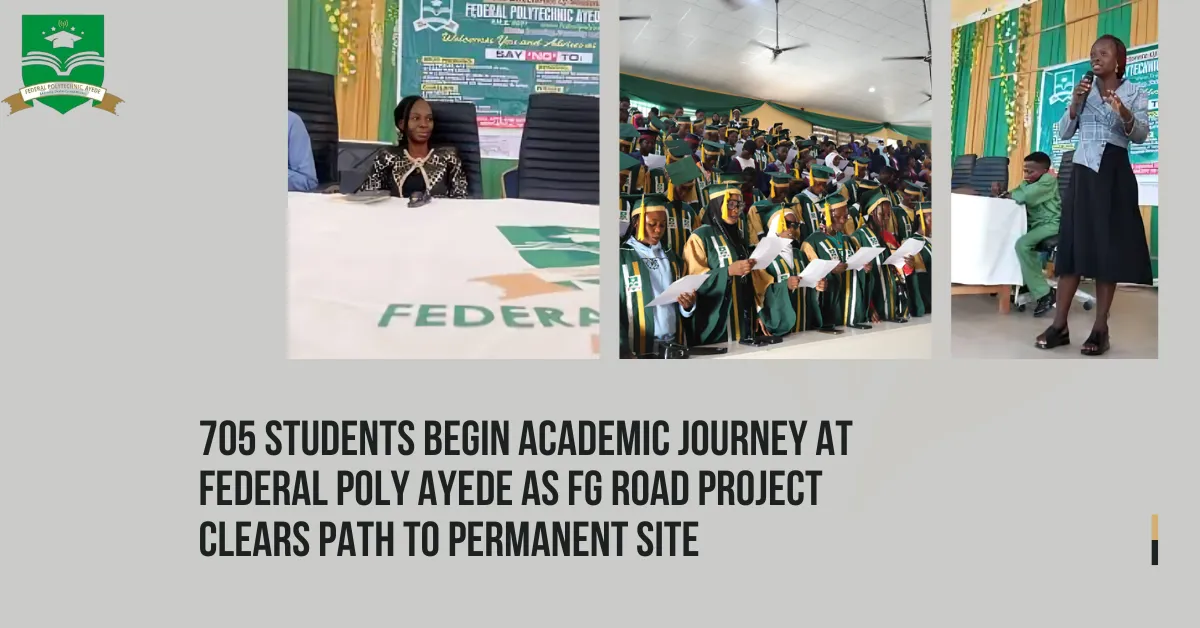
Seven hundred and five students were formally admitted into the Federal Polytechnic Ayede, Oyo State, at its fourth matriculation ceremony held on Thursday at the institution's temporary site in Iresa Pupa, as the Acting Rector used the occasion to announce a federal government road project that will significantly improve access to the polytechnic's permanent campus.
Acting Rector Dr Azeez Ojo told the incoming students that the ceremony marked not just their entry into academic life but their induction into a community committed to knowledge, innovation and character. He warned them against cultism, examination malpractice and drug abuse, describing such conduct as capable of derailing futures that were just beginning. "Dear matriculating students, this is your beginning. Stay focused, work diligently, and strive for excellence. The future is yours to shape," he said.
On behalf of the National Board for Technical Education, Southwest Zonal Director Elder Ayo Aroge urged the students to take full advantage of the Federal Government's Technical and Vocational Education and Training initiative, challenging them to acquire skills that would make them job creators rather than job seekers.
The most immediately consequential announcement of the ceremony concerned infrastructure. Ojo disclosed that the Federal Government had approved a 20 kilometre road project running from Idi Araba Junction to the Institution's permanent site gate in Ayede, Ogo Oluwa Local Government Area, and extending further to the Oolo community in Oriire Local Government Area. The project will also include internal access roads within the campus, with the contractor expected to begin work soon. Ojo described the road as critical to the Polytechnic's planned relocation to its permanent site, noting that its completion would accelerate both infrastructural and academic development.
The Acting Rector also commended the pioneer Rector, Dr Taofeek Abdul Hameed, for laying the Institutional foundation on which the polytechnic now operates, and called on corporate organisations, alumni and philanthropists to partner with the institution in its ongoing development.
For the 705 students beginning their programmes at a polytechnic still operating from a temporary site, the road project and the eventual move to the permanent campus represent the kind of tangible progress that will define the conditions of their training in the years ahead.



Leave a Reply