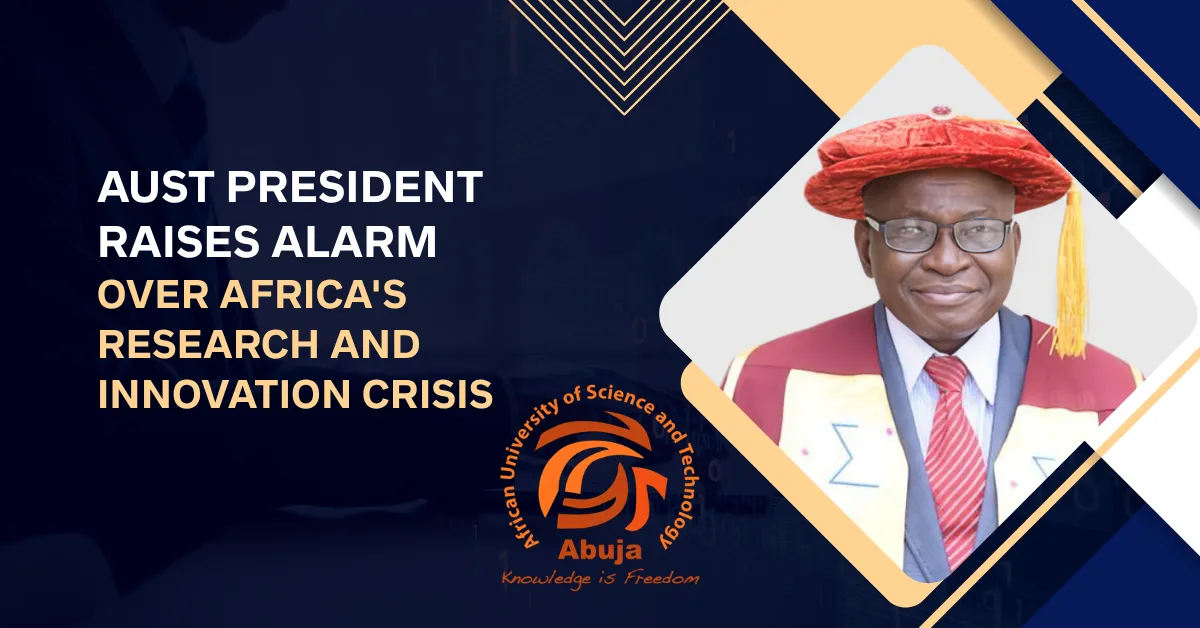
Despite the presence of 300 higher institutions, hundreds of research centres and a growing informal innovation sector, Nigeria still struggles to translate knowledge into tangible economic value, the President of the African University of Science and Technology (AUST), Professor Peter Onwualu, has lamented, as stakeholders prepare for the AfricaX Summit 2026 in Abuja.
Professor Onwualu disclosed at a news conference in Abuja on Wednesday, ahead of the African X Summit 2026 scheduled for April 27 to 29 in Abuja, themed "Reshaping the Future of Africa Through Innovation, Investment and Collaboration." He noted that many solutions deployed to address Africa's challenges are largely imported technologies or semi processed inputs, making development efforts unsustainable. "The issue is that almost everything we use or consume, including what we use in production, is imported, which is the reason why our development agenda is not sustainable," he stated.
The AUST president stressed that Nigeria's enormous potential, including its youthful and highly educated population, abundant natural resources and the growing emergence of innovation hubs across cities, has not been converted into actual innovation resources. He called for greater investment in research and noted that the passage and implementation of the National Research and Innovation Fund, as presented to the National Assembly by President Bola Tinubu, would ensure sustainable funding for research and development.
Onwualu added that more effort must be channelled towards moving research outcomes into innovation and eventually into marketable goods and services through researcher led efforts to develop technologies and solutions. The summit, he noted, was formulated to bridge this gap by convening innovators, investors, entrepreneurs and policymakers under one roof, and aligns with the African Continental Free Trade Area (AfCFTA) framework.
The Chairman of the Local Organising Committee, Kingsley Ogwudu, described the summit as a catalyst to bridge the gap between African research and global capital. "Africa can no longer be a mere consumer of innovation and technology; we must become architects of solutions to our own challenges in health, education, climate change, energy and fintech," Ogwudu stated. He added, "This is your stage for innovators, your deal room for investors, and the future for the public."
The summit's focus areas include innovation ecosystems, investment and finance, youth and women empowerment, and public private partnerships to boost opportunities for African talents to develop solutions with global relevance.



Leave a Reply