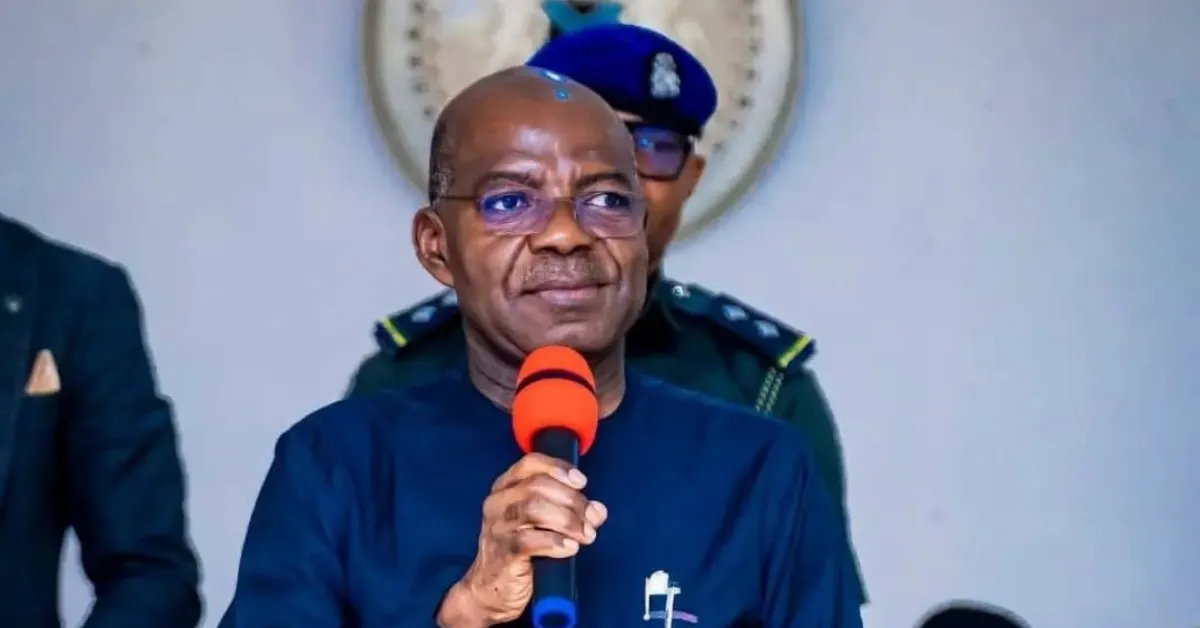
An Education Management and Information System (EMIS) has been adopted by the Abia State Government to improve accurate management, efficiency, and quality in basic and secondary schools throughout the state.
Prince Okey Kanu, the Commissioner for Information, revealed this on Monday during a press briefing at Government House in Umuahia regarding the State Executive Council meeting's conclusion.
"The new system would support planning, monitoring, and measurable outcomes in the education sector by integrating education data and processes at the basic and secondary school levels into a central database," he explained.
In an effort to increase enrolment, he said, the state is also stepping up awareness campaigns about mass literacy, adult education, and informal education programmes. These campaigns are specifically aimed at school dropouts, traders, artisans, and other adults who did not finish formal education.
Prince Kanu also disclosed that the second round of the teacher recruitment process is moving along at a steady pace.
“At the last count, about 36,415 applications were received, while 24,023 applicants were shortlisted for the Computer Based Test (CBT). The date for the CBT will be announced in due course.
“Last year, the state government employed 5,494 teachers, and the target for the second batch of recruitment is 4,000 teachers,” he stated.
Additionally, he affirmed that all 17 local government areas in the state have reopened their mass literacy, adult, and informal education programmes for the 2025/2026 academic year.
Kanu pointed out that the education sector's continuous reforms, especially in basic and secondary education, are having a positive impact.
“Abia State, for the past three years, has consistently emerged as the most successful state in NECO examinations. This record signposts the massive impact of the transformation reform agenda of His Excellency in the education sector,” he said.
The commissioner stated that Governor Alex Otti will officially kick off the construction of the state's first 250-bed, luxury Enyimba International Hotel Limited in Aba, the state's commercial centre, on February 25.
He revealed that the facility, which will be built by the global hospitality chain Radisson Blu Group, will start out with 155 rooms before growing to 250.
According to him, the state government and Radisson Blu Group have already inked a Memorandum of Understanding (MoU), and the latter will run the hotel after it is finished and completely renovated.
“When fully operational, the facility is expected to generate about 5,500 direct and indirect jobs. The Abia State Government aims to boost its internally generated revenue through the luxury hotel project.
“The project will drive economic growth, enhance internally generated revenue, and position the state prominently in the Nigerian hospitality industry,” Kanu stated.
The commissioner revealed that Abia State was the state with the best overall performance at the recently concluded National Basic Education Schools Sports Games, which focused on sports development.
He claimed that, in addition to numerous other medals in various sports, the state delegation took home eight gold medals in athletics.
“The performance of the Abia State contingent is an eloquent testimony to the success of the youth development programmes of this administration, particularly in school sports,” he said.
Regarding infrastructure, Kanu disclosed that 14 sites throughout the state have seen direct labour projects completed by the Ministry of Works. According to him, the ministry's maintenance schedule now includes three new projects in addition to the four that have already been finished.
Among the finished projects are the 9.1-kilometre Umunkpeyi–Umuru–Okokiri Road in Isialangwa South LGA, the 1.1-kilometre Awomukwu–Umusokoro Road in Ikwuano LGA, the 900-metre Umusokoro Road in Ikwuano LGA, and the 14.8-kilometre Alayi–Ugwueke Road in Bende LGA.
Elder Goodluck Ubochi, the Commissioner for Basic and Secondary Education, also spoke and clarified that the EMIS initiative aims to collect detailed information on basic education students.
“This system will enable us to monitor pupils’ progress and track their movement between schools. We observed that children often move from one school to another without proper documentation or control.
“The ministry will now regulate and monitor the transfer of pupils, whether in public or private schools. That is what we intend to achieve with this system,” Ubochi said.
While he acknowledged that the date of the CBT for the second round of teacher recruitment has not yet been set, he promised that the public would be fully informed as soon as a decision was made.

Leave a Reply