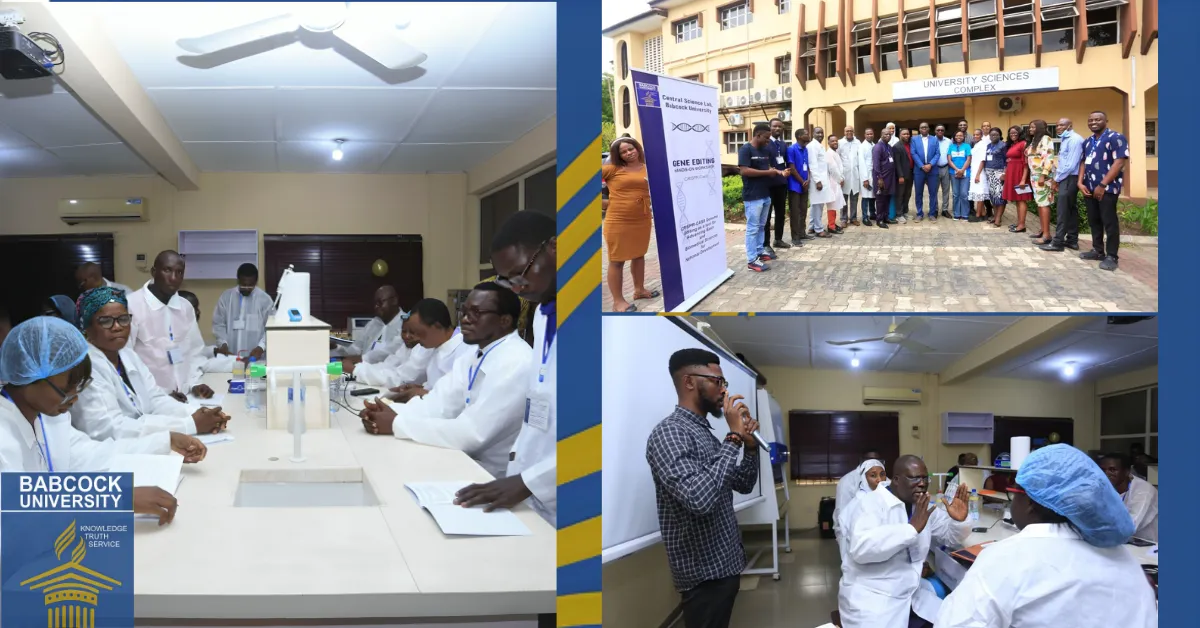
Researchers and academics gathered at Babcock University for a three day workshop on CRISPR Cas9, a powerful gene editing tool that scientists use to modify DNA and develop solutions for diseases and food production challenges.
Professor Joseph Bamidele Minari from the University of Lagos led hands on training sessions, showing participants how to use CRISPR technology in practical research and biotechnology applications.
Babcock University's Central Laboratory organised the workshop to build technical skills among Nigerian scientists and strengthen partnerships between researchers working on genome science.
Dr Franziska Bachler from the University of Basel in Switzerland warned during her keynote address that Nigeria urgently needs laws to regulate how scientists use gene editing technology, stressing that without proper rules, new scientific breakthroughs could create unexpected problems.
She emphasised that researchers carry ethical responsibilities when developing innovations that can alter living organisms at the genetic level.
Professor Cyril Nwagburuka, who chairs the Central Laboratory, expressed confidence that the laboratory's growing research capabilities would help participants improve their scientific work and knowledge.
Professor Ayandiran Daniel Aina, Dean of the School of Agriculture and Technology, described gene editing as an important area of modern science, reaffirming Babcock University's commitment to advanced research and academic quality.
Professor Olusola Ogunwenmo, who chaired the organising committee, encouraged participants to use what they learned about CRISPR to advance medical research and innovation in Nigeria.
Dr Chinedu Anokwuru, representing Professor Jonathan Nwosu, Senior Vice President for Academics, urged attendees to make the most of opportunities to share knowledge and learn from each other during the workshop.
CRISPR Cas9 allows scientists to precisely edit genes in plants, animals, and humans, offering possibilities for treating genetic diseases, developing drought resistant crops, and creating cleaner energy sources.
The programme concluded with participants committing to apply their new skills to research projects that could benefit Nigeria, with organisers describing the workshop as an important step in building the country's capacity in advanced biotechnology.
Babcock University's initiative demonstrates efforts by Nigerian institutions to train scientists in cutting edge technologies that can address local challenges in healthcare and agriculture.



Leave a Reply