Engineering students, graduates and practitioners in Nigeria are facing a significant shift in how the profession is regulated, as the Council for the Regulation of Engineering in Nigeria has announced sweeping reforms that will affect registration, certification, discipline and career prospects across the sector.
The decisions were reached at the Council's 189th Ordinary Council Meeting and signed off by the Registrar and Chief Executive Officer, Engr Okorie Austine Uche.
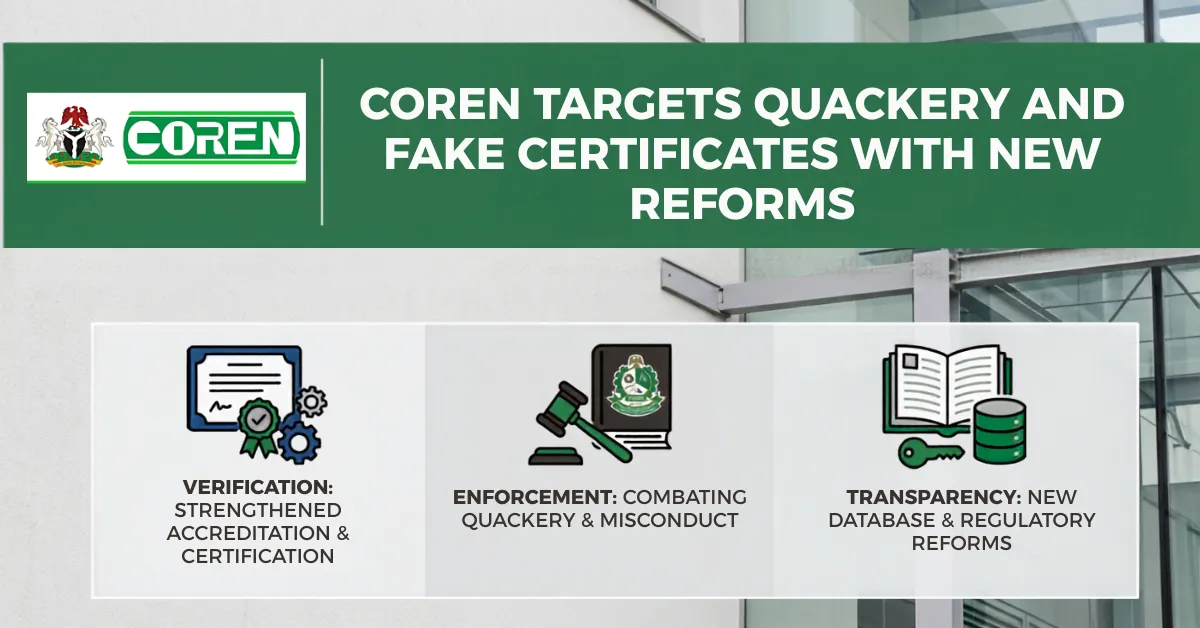
At the top of the reforms is a 90 Day Engineering Regulation Monitoring and Enforcement Rapid Response Task Force, established to hunt down unregistered practitioners, monitor engineering projects and clamp down on quackery. For students and fresh graduates, this signals that practising without proper registration carries real consequences going forward.
The Council also activated the Engineering Disciplinary Tribunal, a formal body that will investigate complaints against practitioners, impose sanctions and enforce ethical conduct. Engineers found guilty of professional misconduct will now face structured legal consequences rather than informal reprimands.
Students who submitted fraudulent academic certificates in registration bids have also been caught in the net. COREN referred nine such cases to anti corruption and law enforcement agencies for investigation and possible prosecution, sending a clear warning that credential fraud will not be tolerated at any stage of the registration process.
For practitioners seeking registration, the Council approved 3,328 new registrations across various categories and 107 engineering firms, while directing a review of registration guidelines to reflect current industry realities and global standards. This review could affect how future applicants qualify and what documentation is required.
Engineering students in tertiary institutions also have a stake in another key decision. COREN approved the gazetting of the Engineering and Technology Accreditation Bureau, reaffirming its authority to accredit engineering programmes nationwide. This means the degrees students earn will continue to be assessed against defined national standards before they can qualify for professional registration.
A nationwide public awareness campaign was approved to educate Nigerians on the risks of hiring unregistered engineers, a move that also strengthens the value of being a properly registered practitioner in a competitive job market.
The Council additionally approved stakeholder engagement on draft national construction safety guidelines and directed the upgrade of its digital portal to make registration and service delivery faster and more accessible for practitioners across Nigeria.



Leave a Reply