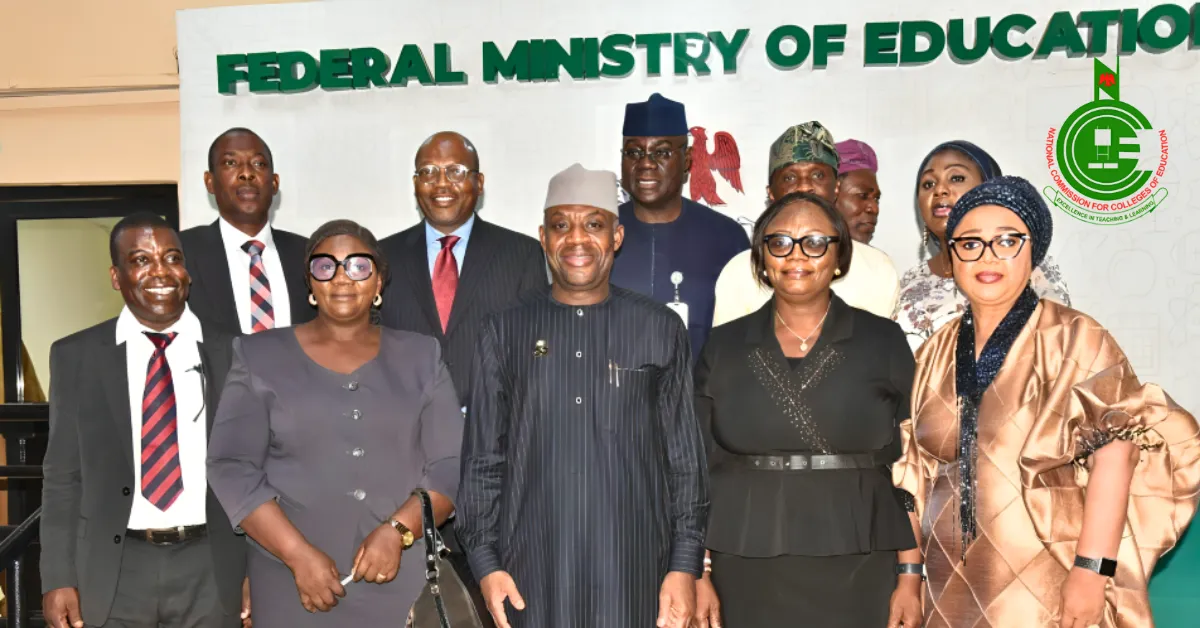
Tunji Alausa, Minister of Education, has inaugurated principal officers for newly established federal tertiary institutions and the National Commission for Colleges of Education at the ministry headquarters in Abuja on Thursday, announcing ₦2 billion take off grants for each of the two new institutions.
Boriowo Folasade, Director of Press and Public Relations at the ministry, announced the appointments in a statement, revealing that the development forms part of efforts to strengthen Nigeria's higher education system.
Among those inaugurated were Professor Nosiru Onibon, who will serve as the pioneer Rector of the Bola Ahmed Tinubu Federal Polytechnic, Abuja; Professor Adeola Oshikoya, appointed Vice Chancellor of the Federal University of Science and Technology, Epe; and Dr Angela Ajala, who assumed office as Executive Secretary of the National Commission for Colleges of Education.
The minister disclosed that the Federal Government approved ₦2 billion each as take off grants for the Bola Ahmed Tinubu Federal Polytechnic in Abuja and the Federal University of Science and Technology, Epe in Lagos State, as part of efforts to support their early operations.
Alausa explained that the ₦2 billion take off grants approved for each institution are meant to help the schools establish basic administrative and academic structures as they commence operations.
"Every child in this country deserves access to the highest quality education comparable to global standards. The appointees were carefully selected based on their record of service and achievements across Nigeria's educational institutions. To whom much is given, much is expected. You have been chosen from millions of Nigerians to serve your country, and this recognition extends to your families as well," the minister stated.
He urged the newly appointed officials to provide strong leadership that would shape the identity and long term development of the institutions, noting that the Federal University of Science and Technology in Epe and the polytechnic in Abuja were strategically located to harness the economic potential and human resources available in the two regions.
The minister explained that the institutions were strategically established to address national and global challenges, including food security, climate change, renewable energy, technological innovation, disaster risk management, and other research fields relevant to national development.
Alausa reaffirmed the government's commitment to strengthening institutional leadership, improving governance frameworks, and advancing policies that enhance the quality and global competitiveness of Nigeria's tertiary education sector.
He urged the new NCCE leaders to strengthen governance across Nigerian colleges of education and promote high academic standards within the country's teacher education system, stressing the importance of teacher education to the development of the country's education system.


Leave a Reply