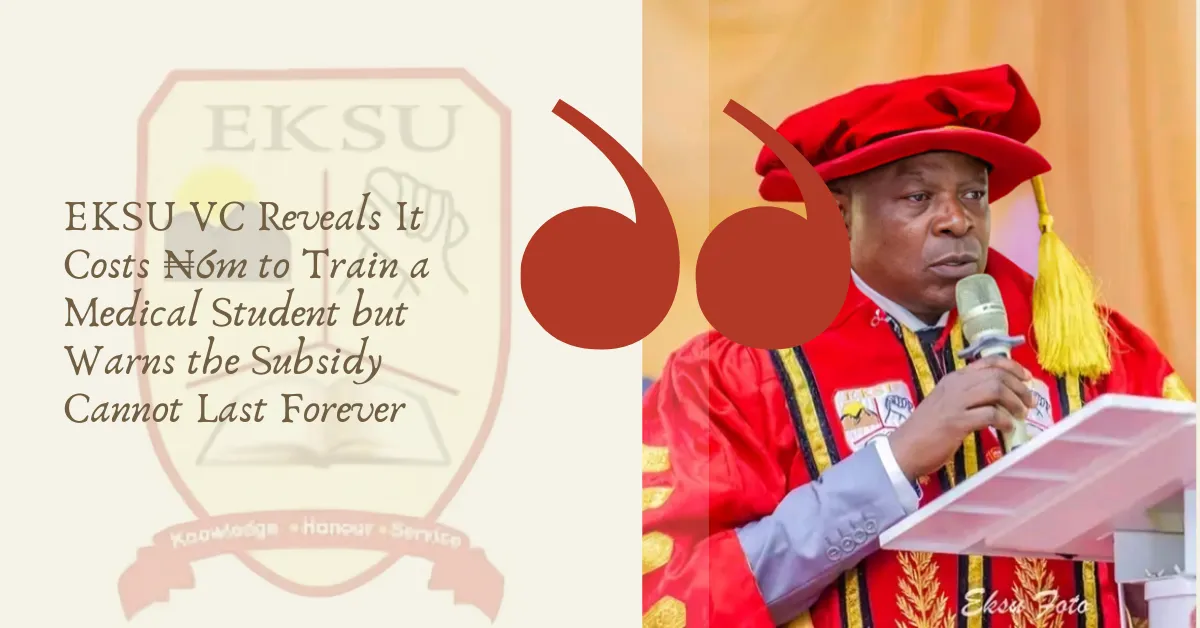
Training a medical student at Ekiti State University costs approximately ₦6 million per session. Students are charged a fraction of that. And the Vice Chancellor is warning that the gap between what it costs and what students pay may eventually bring the system down.
Professor Babatola Ayodele disclosed at a press briefing in Ado Ekiti, where he defended EKSU's tuition structure against a backdrop of rising economic pressures and growing national debate about the affordability of university education in Nigeria. He confirmed that there has been no increase in fees for the 2025/2026 academic session, with the rates from the previous session remaining in place.
The figures he presented make the scale of the subsidy clear. Law and neuroscience programmes cost around ₦3 million per student to deliver, while education related courses run to approximately ₦800,000 per session. Despite these figures, medical students at EKSU pay between ₦500,000 and ₦600,000, nursing and science students pay comparable amounts, and the gap is bridged by government and institutional subsidies that Ayodele described as increasingly strained.
The Vice Chancellor drew a direct comparison with private universities, where medical programmes attract fees of between ₦7 million and ₦8 million per session, and nursing or law programmes cost between ₦5 million and ₦6 million. "When you compare what we are doing here with other universities, our fees are still very cheap," he said.
His warning, however, was unambiguous. "Something must be done, otherwise the system will finally collapse," he said, signalling that while fees have not risen this session, the conversation about what Nigerian public universities can sustainably afford to subsidise is one that can no longer be deferred.
For students at EKSU and their families, the Vice Chancellor's statement offers both reassurance and a preview of difficult conversations ahead. The fees have not moved. The costs have not stopped rising.
Leave a Reply