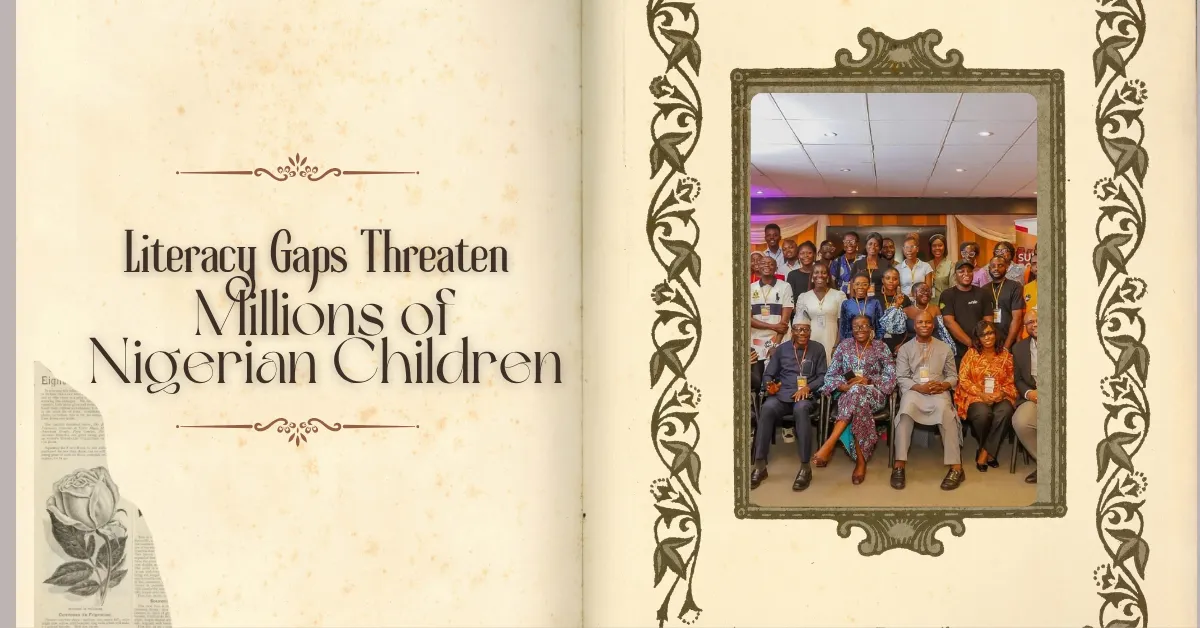
Education experts, policymakers, and literacy advocates have called for stronger investment in foundational learning and comprehensive education reforms in Nigeria, warning that persistent learning gaps continue to put millions of children at risk.
The stakeholders converged in Lagos during the commemoration of World Book and Copyright Day, themed "Turning Pages, Changing Futures," where discussions focused on reading culture, foundational learning, copyright protection, and the role of education in national development. The event was organised by Sun Books Nigeria, a project of the World Literacy Foundation.
Country Manager of Sun Books Nigeria, Afolabi Adelakun, identified foundational literacy as one of the biggest educational challenges confronting African countries, with Nigeria among the most severely affected. He noted that the organisation operates digital learning solutions across Kenya, Uganda, and South Africa, with Nigeria remaining a major intervention priority.
Adelakun acknowledged progress made through digital literacy initiatives in returning children to school and improving retention rates, but warned that inadequate funding and limited government support continue to obstruct expansion. "We cannot solve all the problems of education, but what we are contributing is the digital literacy aspect, which has helped bring many children back to school and keep them in school," he stated.
Chairperson of the Association of Children's Authors and Illustrators of Nigeria and founder of the Winford Centre for Children and Women, Basirat Rasaki, raised concerns about weak intellectual property protection, arguing it discourages innovation and limits growth within the creative education sector. She cautioned that intervention programmes which ignore poverty and cultural realities are destined to fail.
"There are cases where educational technology tools are introduced, but due to poverty and other factors, they are sold instead of used. Programme design must reflect the realities of the people it is meant to serve," she warned.
Representing the Lagos State Government, Senior Special Assistant to the Governor on Basic and Secondary Education, Opeyemi Eniola, described literacy as the foundation for economic development, social stability, and national progress. He stressed that investment in school libraries, teacher training, and culturally relevant learning materials remained critical for Nigeria's future.
Stakeholders at the event agreed that resolving Nigeria's literacy crisis demands sustained funding, stronger policy implementation, and deeper collaboration between the public and private sectors.


Leave a Reply