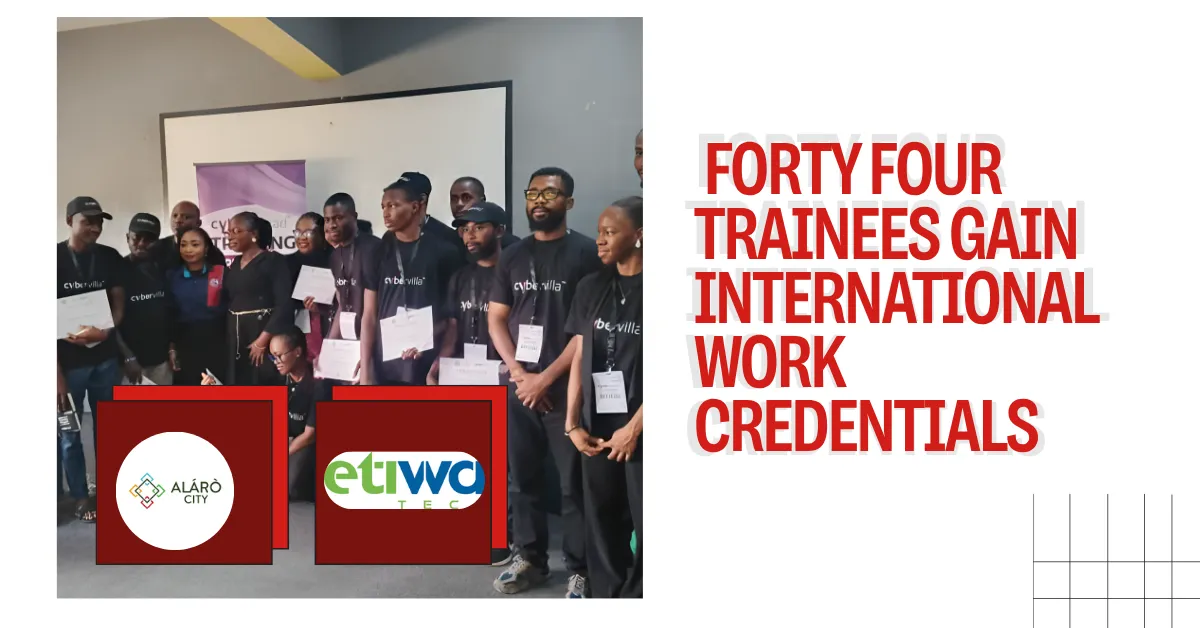
Forty four vocational students finished a seven week regional training scheme on Tuesday to address youth unemployment through certified technical trades. The cohort concluded intensive coursework covering electrical wiring, plumbing, masonry, and temperature control installations to secure immediate employment vacancies. The initiative targeted low income residents from Epe and Ibeju Lekki to match them with commercial infrastructure projects.
The dual certification framework grants local and foreign credentials to the entire group. Academy managing director Mrs Jody Adewale disclosed that investing in vocational crafts provides financial benefits and self expression opportunities for citizens. The leadership noted that when standard corporate roles are unavailable, practical craftsmanship allows individuals to build independent businesses. The training model combined workshop sessions with professional ethics to prepare participants for difficult worksite environments.
Industrial operators noted that technical standards must remain high to sustain corporate trust across the construction market. Corporate affairs head Ms Oluwaseyi Ashade stated that high operational discipline is required as the workers enter the job market. Academic data indicate that formal university degrees do not shield citizens from economic struggles. Trainee Ms Oluwadamilola Adeshafe, who completed the electrical course despite holding a university biology degree, revealed that the scheme bridges the gap between traditional schooling and employment.
The partnership represents the third cycle of joint training operations between the academy and the city development firm. Beneficiary Mr Okonkwo Echezona Martins disclosed that learning masonry altered his perspective on physical labour and shaped his plans for corporate ownership. The training body announced that graduates will receive official Trade Test Certification from the Federal Ministry of Labour and Employment alongside Continuing Professional Development accreditation from the United Kingdom. Representatives revealed that the current framework provides direct paths to self sufficiency across the West African sub region. Testing and selection procedures for subsequent training rounds will continue through standard regional monitoring channels.



Leave a Reply