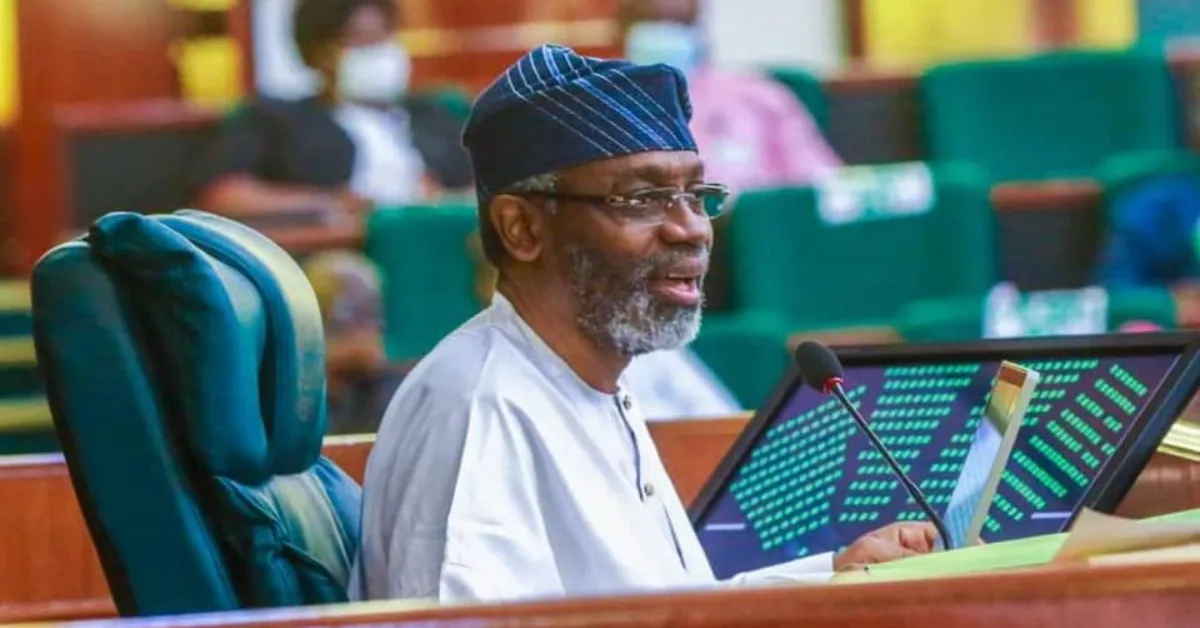
The Chief of Staff to the President and former Speaker of the House of Representatives, Rt. Hon. Femi Gbajabiamila, on Monday, reaffirmed that education remains the foundational pillar of President Bola Ahmed Tinubu’s Renewed Hope Agenda, characterizing it as the primary catalyst for Nigeria’s integration into a competitive, knowledge based global economy. Speaking in Abuja at the 2026 International Day for Education Conference convened by the Speaker of the House of Representatives, Rt. Hon. Tajudeen Abbas, under the theme “Reimagining the Future of Education in Nigeria: Collaborative Solutions for a Brighter Tomorrow,” Gbajabiamila articulated a vision where academic advancement serves as the bridge between national potential and industrial productivity.
The International Day of Education, observed annually to position the youth as active co creators of their academic destiny, serves as a critical reminder of the need to transform learning systems into inclusive, future oriented frameworks. In his address, the Chief of Staff underscored the administration’s resolve to address the systemic crises that have historically left millions of Nigerian children out of school, noting that sustainable development and national security are inextricably linked to the quality of a nation’s classrooms. He reflected on his legislative legacy as the Speaker of the 9th House of Representatives, specifically his sponsorship of the Students’ Loans Bill, which was designed to democratize access to higher education by ensuring that financial hardship does not stifle intellectual merit.
This legislative vision reached fruition within the first ninety days of the Tinubu administration, as the President’s swift assent to the bill led to the establishment of the Nigerian Education Loan Fund (NELFUND). To date, the fund has disbursed billions of naira to eligible students across the federation, a development Gbajabiamila cited as empirical evidence of the strategic priority education holds within the current executive framework. He further commended the 10th House of Representatives for its rigorous oversight of tertiary education funding and its commitment to student welfare reforms, which have enhanced transparency and accountability across the sector. Asserting that Nigeria’s brightest future is being forged in the educational investments of today, he maintained that no nation can achieve global relevance without a sustained and disciplined commitment to the intellectual development of its citizenry.
Earlier in the proceedings, the Special Adviser to the Speaker on International Cooperation and Educational Development, Abisoye Da Rocha Afodu, contextualized the gathering within the United Nations General Assembly’s 2018 proclamation of education as a fundamental human right. She provided a candid assessment of the domestic landscape, noting that Nigeria continues to grapple with the global peak of out of school children, totaling over 20 million, alongside the persistent challenges of aging infrastructure, teacher welfare, and a widening digital divide. The conference was therefore designed as a high level intervention to align lawmakers, development partners, and private sector stakeholders in identifying scalable solutions, particularly for marginalized demographics such as girls and persons with disabilities.
The deliberations also addressed the pragmatic necessity of legislative accountability, with the House currently finalizing measures to ensure the transparent utilization of all educational allocations. This sentiment was echoed by the Chairman of the House Committee on Federal Polytechnic and Higher Technical Education, Hon. Fuad Laguda, who argued that the revitalization of technical institutions is essential for national skills development. The consensus among the leadership remained clear: for Nigeria to translate its significant demographic potential into tangible economic power, it must match its policy rhetoric with bold investment, inter sectoral synergy, and an uncompromising dedication to educational excellence.
Leave a Reply