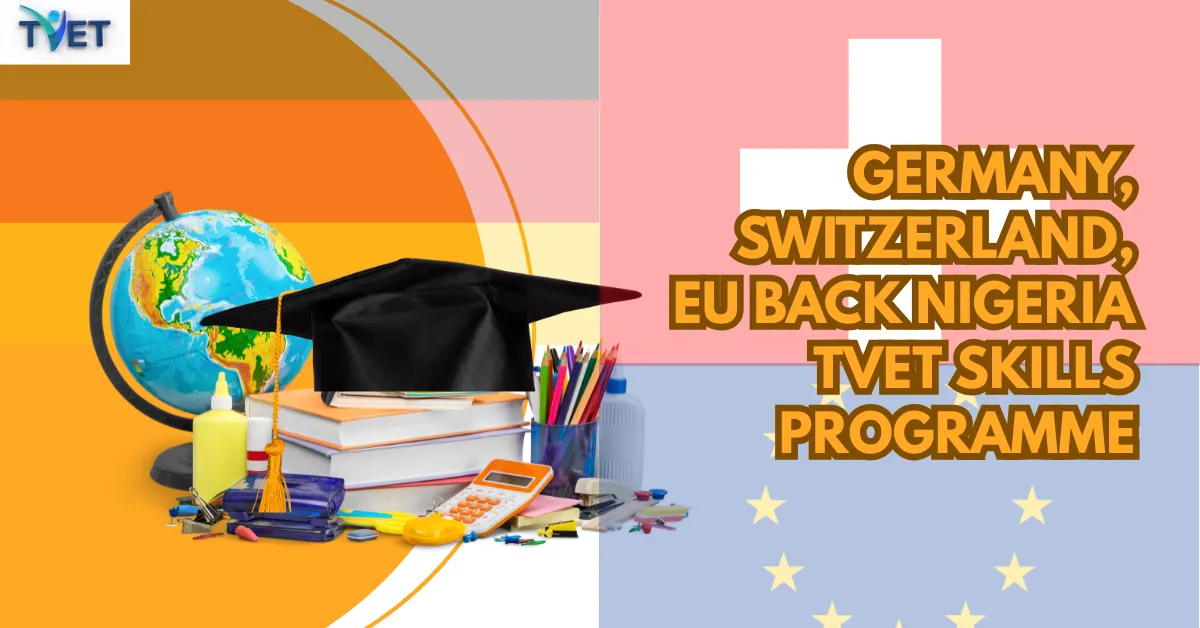
Nigeria's Federal Government and a coalition of international development partners have moved to reposition Technical and Vocational Education and Training as a central driver of employment, industrialisation, and economic growth, with commitments renewed at a major national conference in Lagos on Monday.
The 2026 National TVET Conference, organised by the Federal Ministry of Education alongside partners including the German Agency for International Cooperation, the governments of Germany, Switzerland, and France, the European Union, UNICEF, and the International Organization for Migration, was themed "Harnessing TVET as a Pathway to Employment: Building a System for Employability, Inclusion and Green Growth in Nigeria."
Minister of Education Dr Tunji Alausa told attendees that the Tinubu administration had elevated TVET from an alternative education pathway to a national priority, warning that rapid technological advancement, digital transformation, artificial intelligence, automation, and climate adaptation were reshaping the global future of work.
"For Nigeria, this is not merely an educational challenge; it is an economic imperative. For too long, our education system has produced job seekers. Today, we are transforming it into one that produces innovators, technicians, entrepreneurs, artisans, manufacturers, and job creators," Alausa stated.
He disclosed that 1.3 million Nigerians initiated applications when the TVET portal launched, while 963,000 completed the process. More than 150,000 trainees are currently undergoing training nationwide.
German Consul General Daniel Krull commended Nigeria's TVET reforms and reaffirmed Germany's support for demand driven skills development, private sector participation, and inclusive economic growth, adding that Germany would continue backing Nigeria's industrialisation trajectory.
Swiss Consul General Conny Cammezind noted that TVET had evolved beyond trade preparation, now equipping individuals with the adaptability and innovative mindset required for rapidly changing economies. She reaffirmed Switzerland's commitment to youth employment and sustainable workforce development in Nigeria.
Dr Karin Jansen, Head of Development Cooperation at the German Embassy, described the conference as a strategic platform, noting that a stronger TVET system was critical to social inclusion and Nigeria's green transition.
EU Head of Cooperation Massimo De Luca urged Nigeria to treat TVET as a core human capital strategy, adding that the EU was already working with the Office of the Vice President on youth employability initiatives.


Leave a Reply