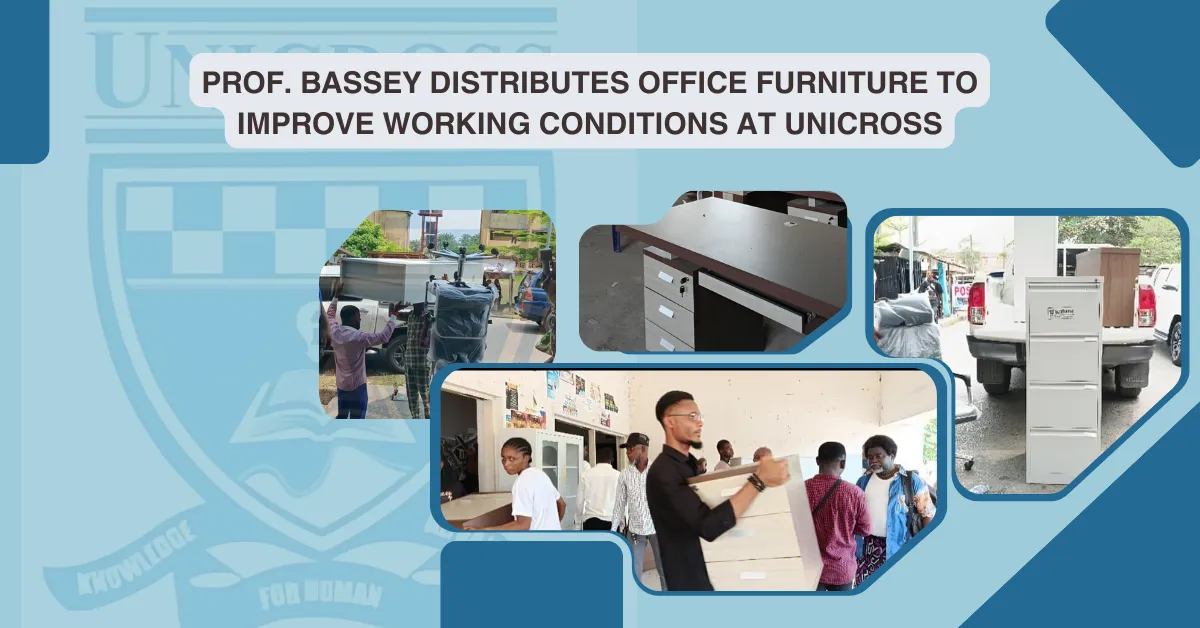
The Vice Chancellor of the University of Cross River State, Prof. Francisca Bassey, is leading a drive to transform working conditions for senior staff by distributing modern office furniture across the institution's three campuses, a move aimed at boosting morale, enhancing productivity, and strengthening administrative efficiency.
The furniture, sourced through the Tertiary Education Trust Fund intervention, was formally handed over to beneficiaries on Thursday, 5 March 2026, during a brief ceremony that highlighted the University management's commitment to creating a conducive working environment.
Beneficiaries include Professors, Deans of Faculties, Heads of Departments, and senior academic and non academic staff. The items distributed include executive office tables and chairs, bookshelves, cabinets, and refrigerators.
Speaking during the presentation, Prof. Bassey urged recipients to ensure proper maintenance and careful handling of the furniture, emphasising that the initiative reflects management's determination to support quality teaching, impactful research, and efficient service delivery.
She stated that improving staff working conditions remains a priority for the University's leadership and noted that the provision of modern office equipment would contribute significantly to productivity and institutional growth.
According to the Vice Chancellor, a similar distribution exercise was carried out last year for departments whose programmes were visited by accreditation teams from the National Universities Commission.
Prof. Bassey disclosed that the next phase of the intervention will involve distributing computers to Heads of Departments who were not covered in the previous exercise, as well as to results portal desk officers and examination officers across the University.
She revealed a startling gap in the University's administrative infrastructure, stating that before the ongoing intervention, no Head of Department across the University's three campuses had been officially assigned a computer for administrative duties.
"This is a gap the current management is determined to address," she stated.
Some of the beneficiaries who spoke with the University's Media Team commended the initiative, describing it as timely and beneficial to departmental operations. They expressed confidence that the improved office facilities would enhance staff productivity and strengthen administrative efficiency across the institution.
The intervention represents part of a broader strategy by the current management to address longstanding infrastructure deficits and position UNICROSS as an institution that prioritises the welfare and working conditions of its staff as a foundation for academic excellence.


Leave a Reply