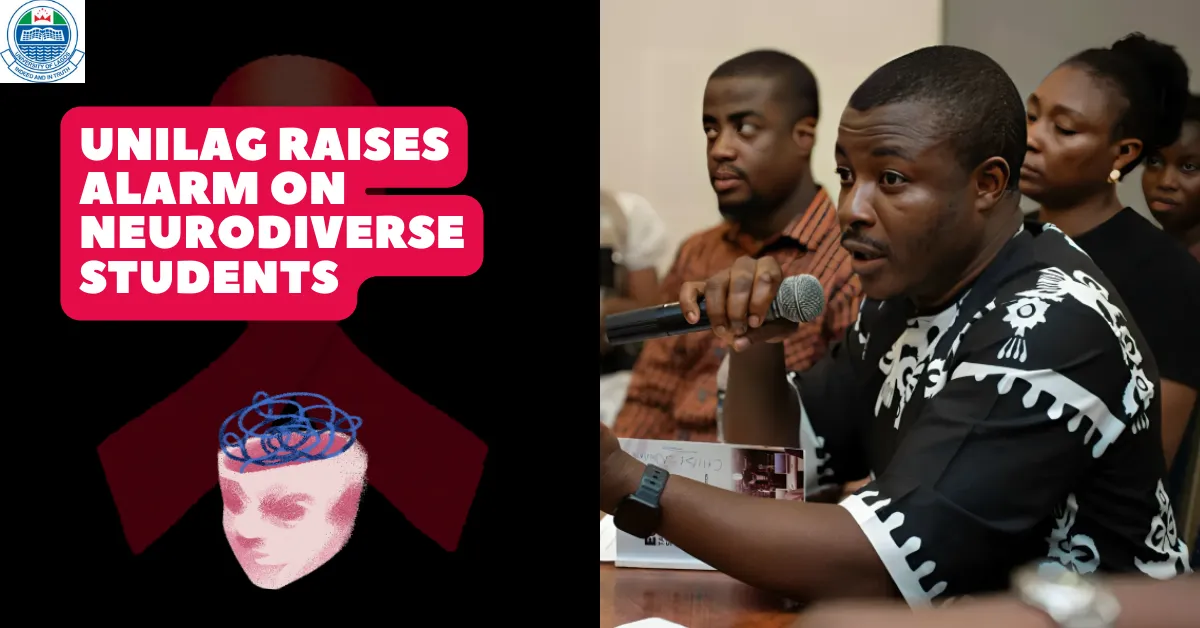
Researchers at the University of Lagos have begun developing artificial intelligence tools capable of transforming how Nigerian Universities support students with Attention Deficit Hyperactivity Disorder (ADHD), in a development that exposes a significant gap in how the country's higher education system treats neurodiverse learners.
Chidiebere B. Nwaneto, a researcher at the Nigerian AI Research Laboratory (NAIL) at UNILAG, is building adaptive learning systems that adjust in real time to the attention and engagement challenges that make conventional classrooms particularly hostile environments for students with ADHD. The research comes at a moment when Nigerian Universities are rapidly expanding their digital and e learning platforms, most of which are being designed with no provision for neurodiverse learners.
Nwaneto's work, supervised by Dr. Chika Yinka Banjo and Dr. Yetunde Folajimi, targets the core difficulties associated with ADHD, including the inability to sustain focus, vulnerability to distraction, and rapid disengagement from learning materials. The central aim is to build intelligent platforms that respond to a student's cognitive state rather than demanding the student adapt to a rigid system.
The implications for Nigerian Universities are immediate. Estimates suggest that a significant proportion of undergraduates across the country are living with undiagnosed ADHD, quietly struggling through degree programmes in Institutions that have made no structural adjustment for their needs. As digital learning becomes the direction of travel for Nigerian higher education, the window to build inclusive systems from the ground up is narrowing.
Universities yet to incorporate neurodiversity into their digital learning strategies may find themselves under growing pressure to act as research of this kind moves from laboratories into policy conversations.



Leave a Reply