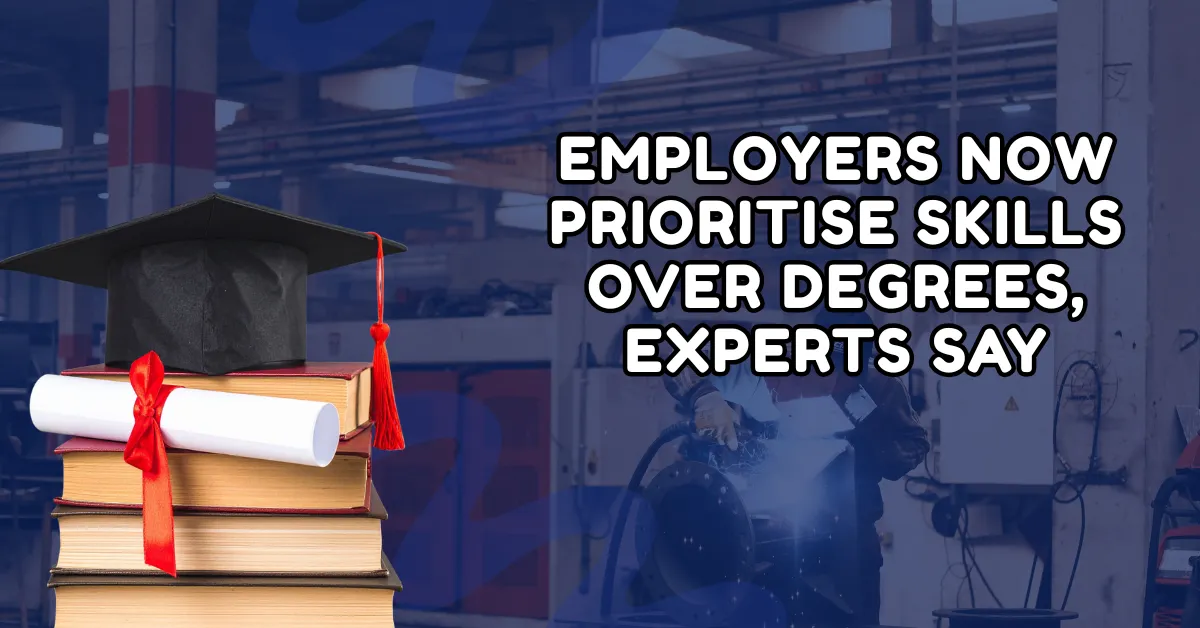
Global recruitment experts have disclosed that employers worldwide are shifting away from academic qualifications towards practical skills, adaptability, and proven capabilities, a trend they say holds particular significance for African graduates seeking international opportunities.
Hiring managers across Europe, Africa and the United States noted that university degrees and certifications, while still valuable, are no longer sufficient to secure or sustain employment in a competitive, technology driven workplace.
Founder and private coach, Mousaab Khaldi, stated that employers today are far more interested in practical performance than academic accomplishments. "When hiring, I would choose practical skills unequivocally, and I say that as someone who has two MBAs. Academic qualifications can give you confidence that the candidate has completed an academic programme. But they tell you absolutely nothing about whether the person can operate under pressure," he said.
Khaldi observed that although many African graduates possess strong academic and technical foundations, employers frequently identify gaps in emotional intelligence, communication, and what he termed interior resilience. He noted that hiring preferences have evolved considerably, explaining that the question "What did you study?" is being replaced by "Show me what you can do?"
Managing Director and Head of SEO at The Ad Firm, Burkan Bur, revealed that his organisation stopped requiring university degrees for many vacancies around 2019 after finding that practical experience consistently produced stronger employees. He disclosed that his best performing SEO professional taught herself Python scripting and Google Tag Manager after struggling for nine months to find employment.
Bur noted that his company spends between 60 and 90 days teaching new hires skills that should have been learned at university, costing between 4,000 and 6,000 dollars per hire. He added that certifications such as Google Ads and HubSpot remain useful because they demonstrate initiative and self directed learning.
Egyptian HR leader, Mohaimen Bayoumi remarked that employers are no longer asking what degree candidates hold but what they can do and how quickly they can adapt. He explained that the biggest gap among graduates is not knowledge but the ability to apply it in real world business environments, adding that adaptability, digital fluency, and continuous learning have become more valuable than ever.
Leave a Reply