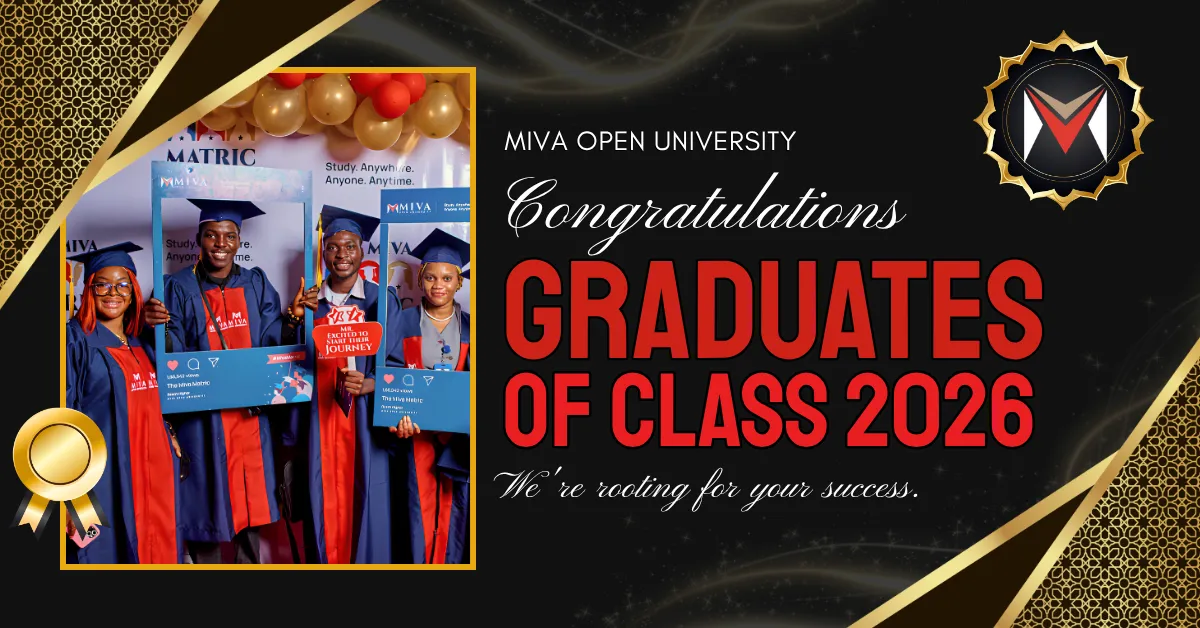
Miva Open University's newly invested Pro Chancellor, Dr Tunji Olowolafe, has called on Nigeria to embrace open and distance learning as a necessary response to the country's deepening higher education access crisis, warning that millions of Nigerians continue to be locked out of conventional university education through no fault of their own.
Olowolafe made the remarks on Saturday at the institution's maiden convocation ceremony, held at the Wole Soyinka Centre for Culture and the Creative Arts, Iganmu, Lagos, where the university graduated its pioneer set of students. The event marked the first time in the institution's history that a graduating class formally exited its programmes.
Speaking shortly after his investiture, the Pro Chancellor identified limited admission spaces, geographical constraints, work commitments and economic realities as the primary factors preventing millions of Nigerians from accessing university education through traditional channels. He argued that open learning, rather than being a lesser alternative, represents a deliberate and principled solution to these structural barriers.
"Education must be designed to meet learners where they are. Expanding access should never be mistaken for lowering standards. Rather, it is about removing barriers and creating opportunities for every willing learner to succeed," Olowolafe stated.
He drew inspiration from the educational philosophy of the late Chief Obafemi Awolowo, positioning Miva Open University as a modern continuation of the vision to bring quality education closer to ordinary Nigerians through technology and innovation. Despite acknowledging that open and distance learning has existed for decades, Olowolafe maintained that its full potential remained largely untapped within Nigeria's education landscape.
The Pro Chancellor commended the university's management and academic staff for sustaining quality amid growing enrolment, describing the ability to maintain excellence at scale as one of the most important tests any institution of learning could face.
Turning to the graduating students, Olowolafe urged them to regard their degrees not as a conclusion but as the foundation of a longer educational journey. "In a rapidly changing world, continuous learning and self development remain the most valuable assets anyone can possess," he remarked.
He also used the occasion to issue a broader charge to Nigeria's educated class, arguing that the country's challenges are rooted not in resource scarcity but in the absence of organised collective will. "Nigeria's greatest challenge is not the absence of resources but the absence of organised will. National progress depends on educated, responsible and committed citizens who are prepared to contribute to something bigger than themselves," he declared.
Education stakeholders present at the ceremony described the graduation of the pioneer class as a strong signal of the growing relevance of technology enabled learning in addressing Nigeria's educational deficit.

Leave a Reply