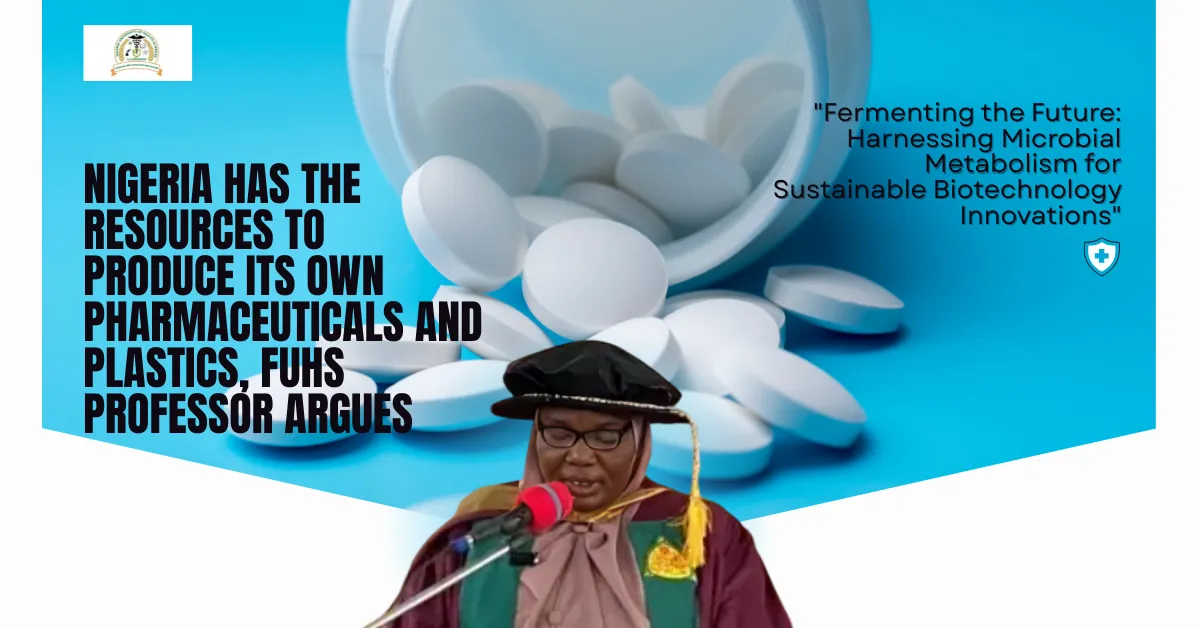
A biotechnology Professor at the Federal University of Health Sciences, Ila Orangun, Osun State, has made the case that Nigeria's dependence on imported pharmaceuticals, plastics, and industrial chemicals is not a resource problem but a strategic failure to exploit what the country already has in abundance.
Professor Simiat Jimoh, an expert in Industrial Microbiology and Biotechnology, delivered the argument at the Institution's maiden inaugural lecture, titled "Fermenting the Future: Harnessing Microbial Metabolism for Sustainable Biotechnology Innovations," where she outlined how Nigeria's agricultural waste and indigenous microbial resources could be turned into high value industrial products.
"In Nigeria, the persistent reliance on imported pharmaceuticals, polymers, and bio based chemicals has hindered industrial independence and continually strained the country's foreign reserves. Yet embedded within our abundant agricultural residues and rich indigenous microbial diversity lies a transformative opportunity," she said.
Professor Jimoh argued that through targeted microbial bioprocessing, agricultural waste that is currently discarded or burned can be converted into bioethanol, biodegradable plastics, biosurfactants for use in detergents and environmental remediation, and diabetic friendly sweeteners. The approach, she said, would reposition waste as a raw material, generate employment in green industries, and reduce the foreign exchange burden created by continued reliance on imported alternatives.
She described microbial biotechnology as a field with consequences far beyond the laboratory. "Microbes are no longer confined to laboratory studies; they have become strategic tools for sustainable development," she said, adding that the same microbial systems used to produce industrial bioproducts offer practical solutions across health, agriculture, energy, and materials science.
For students in biology, chemistry, and health science disciplines at Nigerian Universities, the lecture pointed towards a research frontier that is both globally relevant and domestically urgent, one where Nigeria's own environment provides the raw material for scientific and industrial breakthroughs.



Leave a Reply