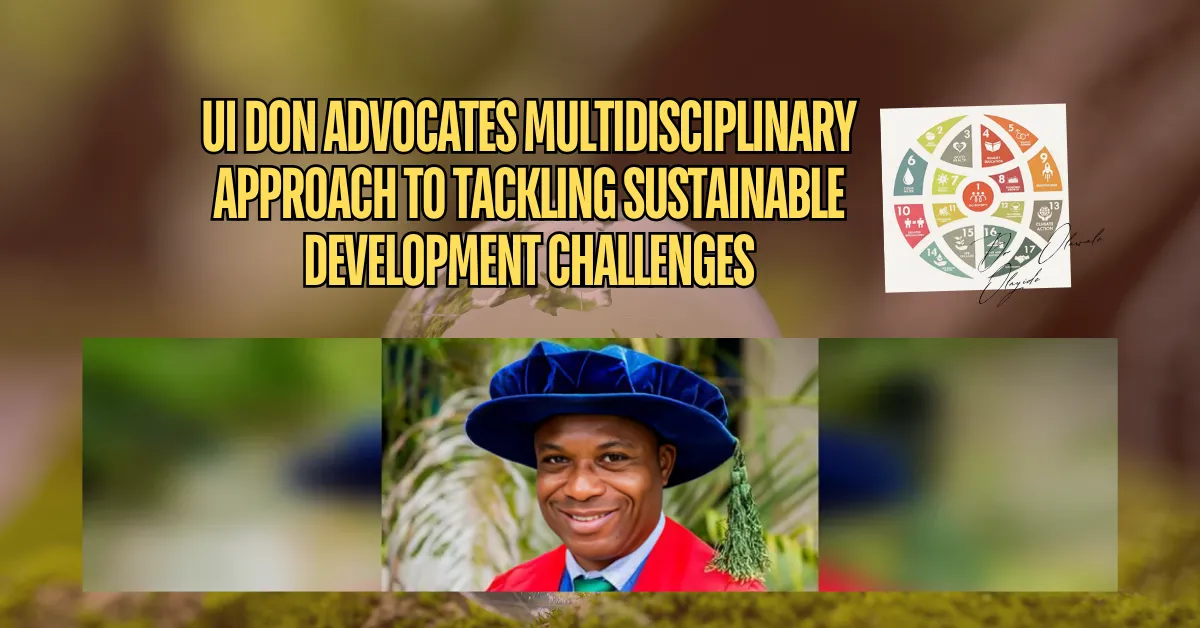
A University of Ibadan don, Dr Olawale Olayide, has called for a multidisciplinary approach to addressing increasingly complex global development challenges, cautioning that isolated policies and single discipline interventions could undermine long term progress.
Olayide made the call while delivering the inaugural lecture of the Faculty of Multidisciplinary Studies, University of Ibadan, titled "GBOGBONÌṢE: A Reflection on Multidisciplinarity and Sustainability in Practice."
He argued that sustainable development requires governments, academic institutions, researchers, policymakers, communities, and the private sector to collaborate across disciplines, maintaining that fragmented policy making risks overlooking the interconnected nature of development challenges and the Sustainable Development Goals.
Olayide explained that multidisciplinarity, interdisciplinarity, and transdisciplinarity are complementary rather than competing approaches, each contributing to translational research and practical solutions for sustainability. He noted that sustainable development rests on three interconnected pillars, namely social, environmental, and economic, which together promote equity, viability, and bearability.
Meaningful development, he stressed, can only be achieved when equal attention is given to people, the planet, and prosperity, rather than pursuing economic growth at the expense of environmental protection or social wellbeing.
Drawing from the Yoruba concept of GBOGBONÌṢE, Olayide said versatility should be viewed as an asset, adding that future professionals would be valued not merely for specialised expertise but for their ability to work across disciplines.
On the Sustainable Development Goals, he cautioned governments and institutions against implementing goals in isolation, explaining that actions taken on one goal can either reinforce or undermine progress on another.
The don described greed and corruption, rather than technological limitations, as humanity's greatest obstacles to sustainable development, insisting that these vices continue to frustrate efforts toward inclusive global progress despite advances in science and technology.
He further called for far reaching reforms in higher education, including a curriculum overhaul promoting multidisciplinary learning, stronger institutional collaboration, innovation hubs, and sustainability reporting to prepare professionals for the post 2030 development agenda.
Among his recommendations were the introduction of a general studies course on multidisciplinary studies, the establishment of a University of Ibadan Multidisciplinary Innovations Hub for Global Futures, annual institutional sustainability reporting, and greater investment in sustainable energy systems.
Looking beyond 2030, Olayide described sustainable development as an evolving process rather than a destination, noting that future agendas, including Africa's Agenda 2063, would continue focusing on meeting fundamental human needs through integrated strategies.

Leave a Reply