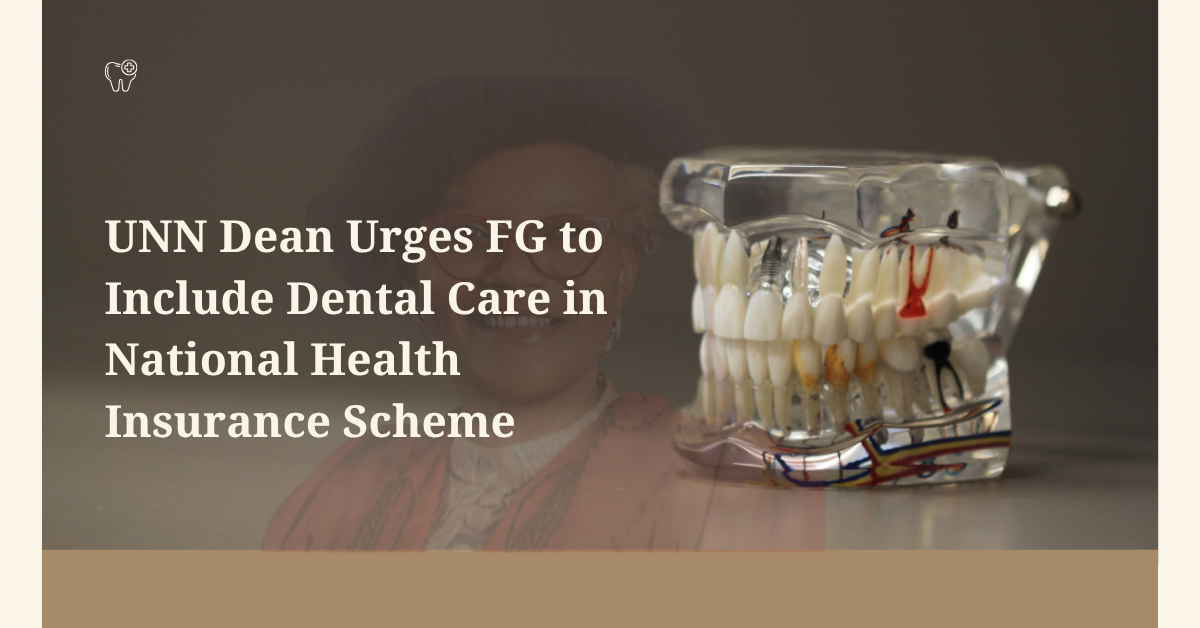
A Senior Academic at the University of Nigeria has issued a strong call for the Federal Government to treat oral health as a national priority, warning that the current level of funding and policy attention falls far short of what is needed to address a growing public health crisis.
Professor Linda Okoye, Dean of the Faculty of Dentistry at the University of Nigeria, Enugu Campus, delivered the warning during the Institution's 236th inaugural lecture, titled "Beyond The Smile: The Myth, The Truth and the Control of Tooth Decay." The Professor of Restorative Dentistry expressed alarm that only 0.5 per cent of the overall health sector budget of N2.48 trillion had been allocated to oral health, describing the figure as wholly inadequate given the scale of the problem facing the country.
Okoye urged the Government to include basic preventive and restorative dental services in the National Health Insurance Scheme and to subsidise care for vulnerable groups, particularly children and the elderly. She called for the exploration of water or salt fluoridation through pilot programmes, the introduction of school based oral health initiatives across all primary schools, and tighter regulation of sugar rich products marketed to children, consistent with existing restrictions on tobacco and alcohol.
"The Government must mandate clear sugar content labelling on all packaged foods and beverages," she said. The Professor also stressed the urgent need to expand training capacity for dental professionals and develop a mid level oral health workforce through dental therapy programmes, describing both measures as critical to resolving the country's chronic shortage of dental care providers.
Okoye extended her message to individual Nigerians, urging them to brush twice daily with fluoride toothpaste, limit sugar consumption, reduce eating occasions to between three and four times daily, and seek preventive dental care regularly.
Her lecture served as a sobering reminder that oral health, long sidelined in Nigeria's healthcare planning, carries consequences that extend well beyond the dentist's chair and into the broader wellbeing of the nation.



Leave a Reply