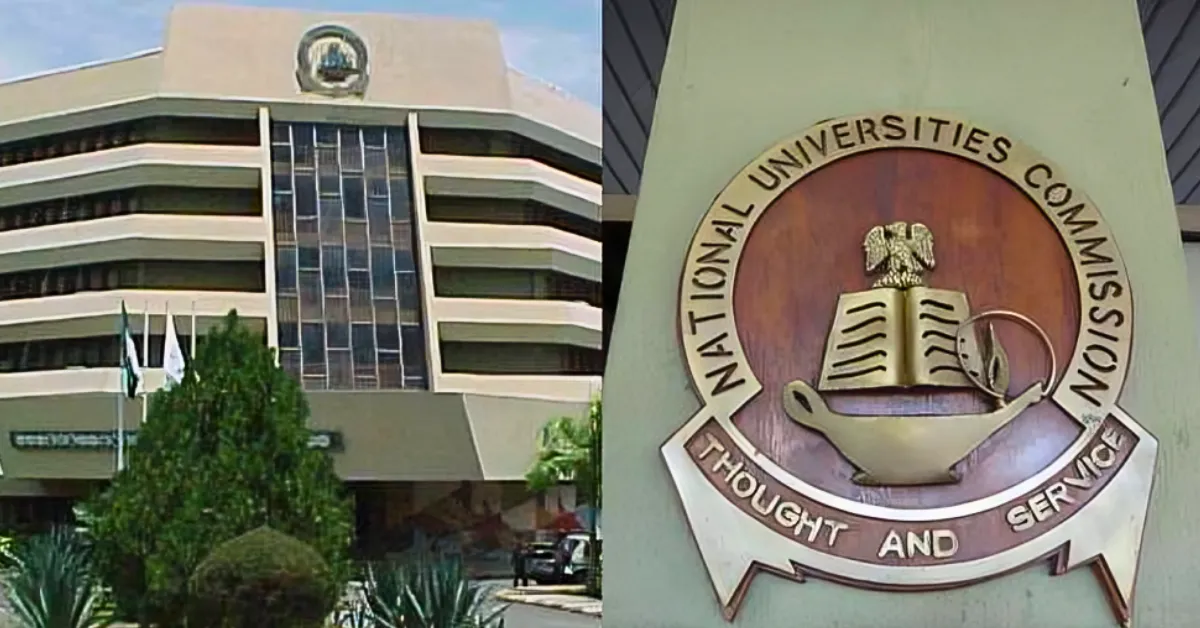
Nigeria's university landscape has expanded significantly following the National Universities Commission's approval of 33 new institutions in 2025, pushing the country's total number of accredited universities to 309.
Data from the NUC website reveals that private universities dominated the new approvals, with 20 institutions receiving operating licences. The federal government established seven new universities, with state governments accounting for the remaining six.
The seven new federal universities are located in Rivers, Kaduna, Ogun, Osun, Ekiti, Oyo, and Zamfara states. Among the new state institutions, Niger, Benue, Cross River, and Imo states each established one university, while Ebonyi established two.
Notable new federal institutions include the Federal University of Environment and Technology in Tai Town, Rivers State; Federal University of Applied Sciences in Kachia, Kaduna State; Federal University of Agriculture and Developmental Studies in Iragbiji, Osun State; Federal University of Technology and Environmental Studies in Iyin Ekiti, Ekiti State; and Federal University of Agriculture and Technology in Okeho, Oyo State.
New state universities include Abdulsalam Abubakar University of Agriculture and Climate Action in Mokwa, Niger State; Ebonyi State University of ICT, Science and Technology in Oferekpe, Ebonyi State; Cross River University of Education and Entrepreneurship in Akamkpa, Cross River State; and Benue State University of Agriculture, Science and Technology in Ihugh.
Among the new private institutions are Leadership University in Abuja, Jimoh Babalola University in Ilorin, Kwara State; Bridget University in Mbaise, Imo State; Greenland University in Jalingo, Taraba State; and Unique Open University in Ojo, Lagos State.
Of Nigeria's 309 universities, private institutions lead with 168, followed by federal universities with 74, while state universities account for 67.
In January 2026, NUC Executive Secretary Abdullahi Ribadu announced that more than 879 new academic programmes were introduced in Nigerian universities in 2025, following the recent approval of the Core Curriculum Minimum Academic Standards framework.
Ribadu explained that the CCMAS framework guides university programmes, with 70% devoted to core content and 30% reserved for university specific content. He noted that the move was aimed at transforming the Nigerian university system to produce graduates who are globally competitive.
The new programmes incorporate 21st century skills, including digital literacy, entrepreneurship, and problem solving, with emphasis varying across disciplines.



Leave a Reply